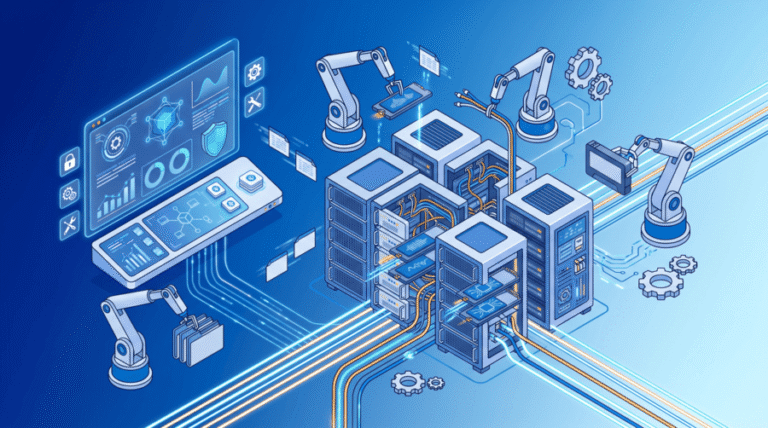
Configuration drift, inconsistent environments, and unpredictable deployments are persistent challenges as digital operations scale. Teams often grapple with servers that accumulate unique changes over time, resulting in environments that behave differently across development, staging, and production. Manual interventions to fix issues or patch vulnerabilities become increasingly risky, especially when every server is treated as a one-off entity. When updates or rollbacks are needed, the lack of standardization can turn even routine changes into high-stakes tasks, threatening uptime, compliance, and business continuity.
Shifting from Mutable to Immutable Infrastructure
Traditional infrastructure management relies on mutable systems—servers and environments that are modified in-place to accommodate updates, patches, or configuration changes. Over time, this approach leads to snowflake servers, where no two environments are alike. This lack of uniformity complicates troubleshooting and increases the risk of security vulnerabilities, as some servers may not receive critical updates or may be misconfigured through manual processes.
Immutable infrastructure, in contrast, operates on the principle that components are never changed after deployment. Any update—whether a security patch, a configuration tweak, or a version upgrade—triggers the creation of a new, fully configured instance. The old instance is then retired. This ensures that every environment, from development to production, remains consistent and predictable, greatly reducing the risk of configuration drift and deployment failures.
The Role of Infrastructure as Code (IaC) in Immutability
IaC is the practice of managing and provisioning infrastructure using machine-readable definition files, rather than manual processes. By treating infrastructure as software, teams can leverage practices like version control, automated testing, and modular design to ensure reliability and repeatability.
- Declarative Syntax: Tools such as Terraform, OpenTofu, and AWS CloudFormation allow infrastructure to be defined in a declarative manner. This means specifying the desired outcome, not the steps to get there. The platform reconciles the difference, ensuring the deployed infrastructure matches the intended state.
- Version Control: Storing definitions in repositories like Git enables teams to track every change, collaborate through pull requests, and roll back to previous versions if issues arise. This history is essential for operational resilience as well as compliance and auditability.
- Modularization: Breaking infrastructure into reusable modules and templates reduces repetition and error, supporting rapid scaling and easier updates across multiple environments.
- Automation and CI/CD Integration: Integrating IaC into CI/CD pipelines automates deployment, validation, and rollback, ensuring infrastructure changes are tested and released alongside application code. This eliminates manual steps and reduces human error.
- Idempotency: Applying an IaC definition multiple times yields the same result, ensuring that environments can be rebuilt or updated reliably, even in the most dynamic scenarios.
Implementing Immutable Infrastructure: Detailed Steps and Best Practices
- Establish Desired State Definitions: Codify every infrastructure component—compute, networking, storage, security policies, and dependencies—using IaC tools. Ensure that each component is described in terms of its end state, enabling automated reconciliation and drift detection.
- Centralize and Version All Infrastructure Code: Store all infrastructure code in a secure version control system. Use robust branching and review workflows to manage changes, support peer review, and maintain a clear, auditable history.
- Parameterize and Modularize for Environment Flexibility: Use variables, parameter files, and modular templates to support different environments (development, QA, production) without duplicating code. This approach minimizes code sprawl and supports rapid, error-free deployments across the organization.
- Automate Lifecycle Management: Implement workflows that automatically destroy outdated resources and create new instances as changes are committed. This is the core of immutability—never modify a running system, always replace.
- Integrate Automated Testing and Validation: Embed automated syntax checks, compliance scans, and integration tests within your CI/CD pipelines. This ensures that any code change is validated before it reaches production, reducing the risk of outages and misconfigurations.
- Externalize Stateful Data: For applications and databases requiring persistent storage, decouple data from the application layer. Use managed database services, persistent volumes, or network-attached storage to ensure that data survives even as application instances are replaced.
- Monitor Drift and Enforce Consistency: Regularly use drift detection tools to compare the actual state with the desired configuration. Where discrepancies are found, automatically remediate by reapplying the correct configuration or recreating instances.
Applying Immutable Patterns in Real-World Environments
Adopting immutable infrastructure is not limited to cloud-native or containerized workloads. It is equally applicable to bare metal servers, virtual machines, and even hybrid environments. For example, enterprise hosting platforms can offer dedicated server solutions with instant provisioning, NVMe SSDs, and global network reach, making it feasible to implement immutable patterns at scale. By combining robust infrastructure with automated provisioning and management, teams gain the agility to respond to business needs while maintaining operational discipline.
Leveraging highly customizable dedicated servers, organizations can deploy standardized server images across multiple regions, harnessing direct network routes for low latency and integrating advanced security features such as DDoS protection and Web Application Firewalls. Whether supporting high-traffic applications, mission-critical databases, or complex hybrid cloud architectures, this infrastructure backbone ensures that immutable practices are not only possible but practical and performant.
Security, Compliance, and Disaster Recovery in Immutable Environments
Security and compliance are integral to immutable infrastructure. By codifying security policies—firewall rules, access controls, encryption settings—into versioned infrastructure definitions, organizations ensure that every environment is provisioned with the correct protections, every time. Automated compliance checks and audit trails further support regulatory requirements such as ISO 27001, PCI DSS, or GDPR.
Disaster recovery is also streamlined; when every environment can be rebuilt from code, recovery becomes a matter of redeploying tested, version-controlled artifacts, restoring persistent data, and resuming operations. This reduces downtime and ensures that recovery steps are reliable and repeatable under pressure.
Dataplugs: Infrastructure for Immutable and Automated Environments
Dataplugs provides a strong foundation for organizations looking to implement immutable infrastructure and automation at scale, helping to address the unique requirements of modern digital operations:
- Customizable dedicated servers with enterprise-grade hardware, including NVMe SSDs and the latest Intel/AMD processors
- Global network connectivity with direct China routes, multi-path BGP, and multiple Tier-1 ISP integrations for high availability and performance
- Advanced security features such as DDoS protection and Web Application Firewall (WAF) to safeguard every deployment
- Rapid provisioning and flexible scaling options, enabling seamless integration into CI/CD-driven workflows
- 24/7 multilingual technical support, ensuring guidance and troubleshooting for complex automation and infrastructure challenges
- Managed backups, SSL certificates, and migration services to support business continuity and compliance
- Tier 3+ data centers in Hong Kong, Tokyo, and Los Angeles that cater to data residency and regulatory needs
With Dataplugs, enterprises can confidently manage and scale immutable infrastructure, benefiting from both robust technology and expert support.
Conclusion
Implementing immutable infrastructure with sound code principles transforms IT operations from a reactive, error-prone process to a proactive, resilient, and scalable discipline. By embracing Infrastructure as Code, automating every stage from provisioning to recovery, and leveraging robust platforms such as those provided by Dataplugs, organizations can achieve unparalleled consistency, speed, and confidence in their digital operations. Those who adopt these patterns position themselves for growth, resilience, and security in an increasingly complex digital world.
For organizations ready to modernize and automate their infrastructure lifecycle, Dataplugs provides the foundation—combining enterprise-grade hardware, advanced connectivity, and expert support to make immutable operations not just an aspiration, but a reality. To learn more, reach out via live chat or email sales@dataplugs.com.