As a Cloud Service Provider (CSP), your customer base is highly varied. The infrastructure requirements of a budget-focused small business are vastly different from those of a multinational enterprise needing strict data isolation and extensive management control.
To expand your Total Addressable Market (TAM) and offer the precise level of control, cost, and isolation your tenants require, you need a highly flexible infrastructure strategy.
Below, we outline five distinct deployment models—from shared infrastructure to dedicated, large-scale fleets—to help you organize your service catalog and align your offerings with the appropriate tenant profiles.
1. The Consolidated Domain
This model is ideal for supporting small to medium-sized businesses with low-cost, dedicated infrastructure and complete control.
In this entry-level model, the management and workload domains are combined into a single, consolidated footprint. This offers a highly simplified consumption experience for the end-user while minimizing resource overhead.
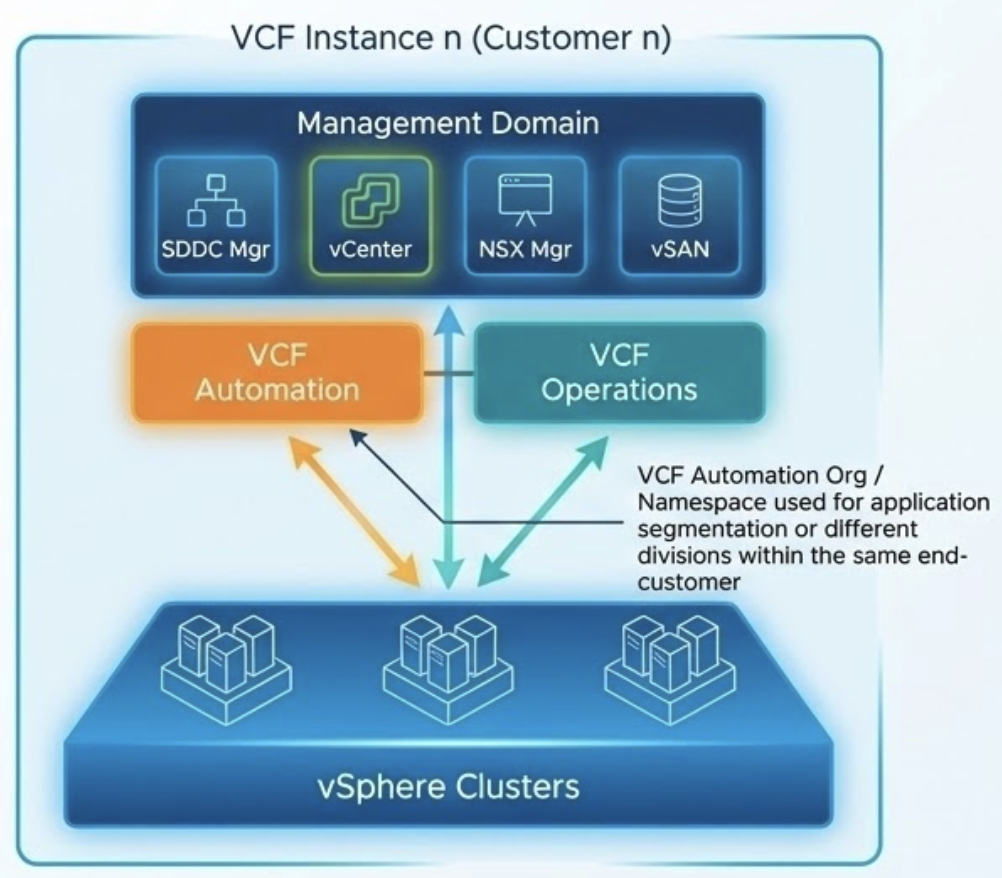
• Infrastructure: Dedicated
• Tenant Experience: Simplified consumption
• Management Access: Full access
2. Shared Workload Domains
This deployment model allows CSPs to serve customer segments like small to medium-sized businesses seeking a highly cost-optimized, public cloud-style experience with sometimes large capacity needs.
This model maximizes your hardware utilization by hosting multiple customers across multiple workload domains on shared infrastructure. It is the classic “public cloud” model, allowing you to offer highly competitive pricing by pooling resources, making it ideal for cost-conscious tenants who do not strictly require hardware isolation.
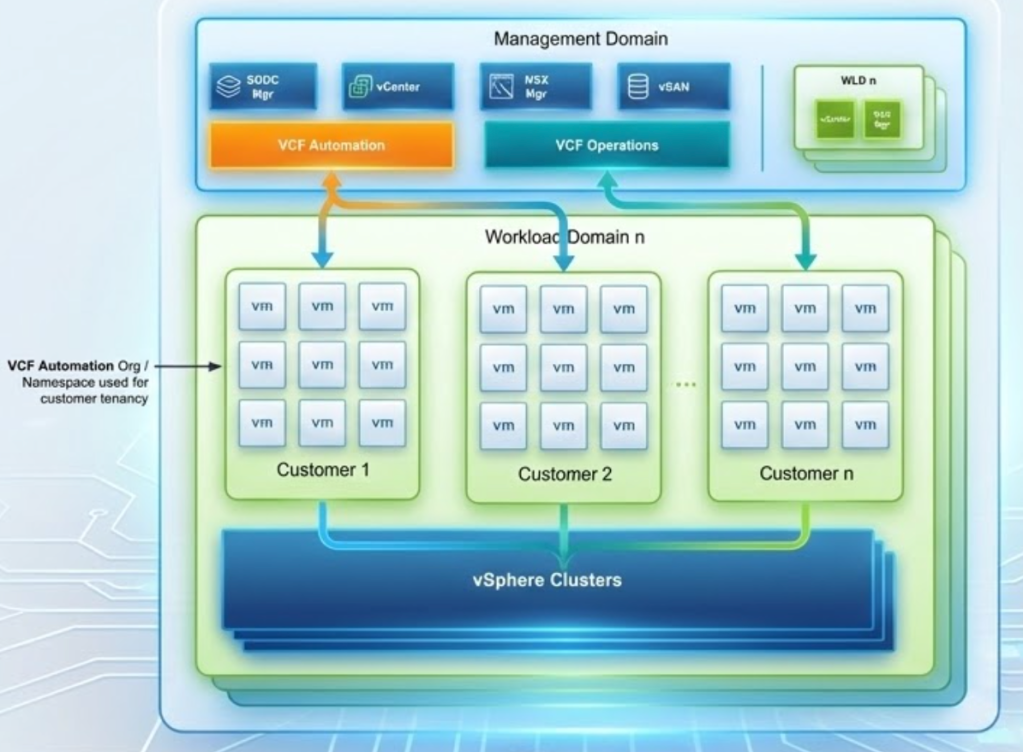
• Infrastructure: Shared
• Tenant Experience: Public cloud consumption
• Management Access: None (Managed entirely by the CSP)
3. Dedicated Workload Domains
The target customer base is from SMEs to Enterprise customers requiring strict infrastructure isolation without the burden of management.
For clients with compliance or performance requirements that dictate dedicated hardware, this model assigns individual customers to their own isolated workload domains. It delivers a true private cloud experience. However, the CSP retains administrative control, making it perfect for organizations that want dedicated performance but lack the in-house expertise to manage the underlying infrastructure.
Similar Posts
How to Create a Do Not Sell My Info Page in WordPress
Creating a website that people trust starts with protecting their personal information. Privacy laws like GDPR…
How to Add Login with Phone Number via OTP in WordPress
Remember when email and password were the only way to log into websites? Times have changed,…
11:11 Systems Buys Ntirety as VMware Partner Shake-Up Continues
11:11 Systems has expanded its global footprint in managed cloud and infrastructure services with the acquisition…
Introducing WPFilters: The Easiest Way to Add Advanced Search Filtering to WordPress
Ever looked at the search filters on Amazon or Airbnb and wished you could make the…
How to Do an Actually Useful PPC Competitive Analysis Using AI
A competitive PPC (Pay Per Click) analysis is all about seeing what your competitors are doing…
Only 12% of AI Cited URLs Rank in Google’s Top 10 for the Original Prompt
In a dataset of 15,000 prompts, we found that—on average—only 12% of links cited by ChatGPT,…