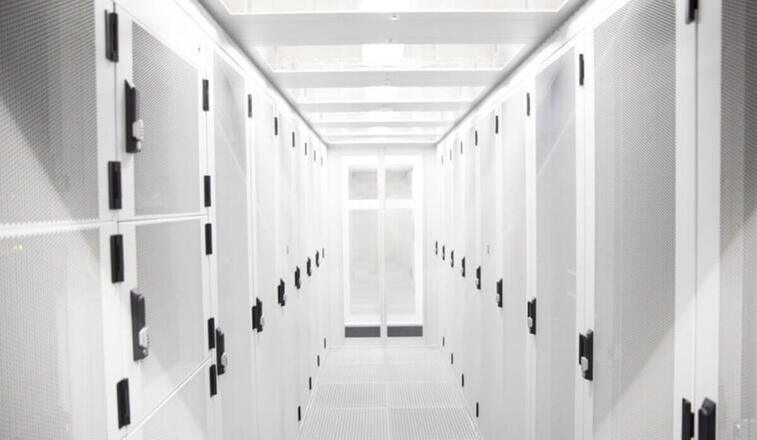
For many organizations, co-locating IT equipment in a third-party data center offers a way to reduce capital expenditure, improve resilience, and shift internal focus toward innovation rather than infrastructure management. Yet the benefits of colocation are only realized when the chosen facility aligns closely with a company’s technical, operational, and strategic requirements.
Industry analysts note that while colocation adoption continues to rise globally, mismatched expectations between customers and data center providers remain a frequent source of operational friction.
The challenge for decision-makers is not whether to use a data center, but how to select the right one in an increasingly complex landscape shaped by hybrid IT, cloud interconnection, regulatory scrutiny, and rising power density.
Aligning Business Objectives with Infrastructure Strategy
The starting point for selecting a data center is not technical specifications, but clarity around business objectives. Infrastructure decisions increasingly affect uptime guarantees, customer experience, regulatory compliance, and the speed at which companies can scale or enter new markets. As a result, site selection is no longer the sole responsibility of IT teams.
Effective evaluations typically involve senior leadership, network architects, DevOps and SecOps teams, and application owners. Each group brings different priorities: executives focus on cost predictability and risk, engineers on performance and redundancy, and developers on latency, automation, and deployment flexibility. Organizations that fail to reconcile these perspectives often discover gaps only after migration.
Once objectives are defined, companies must translate them into infrastructure requirements. These may include higher availability targets, reduced internal operational overhead, stronger security postures, or improved application responsiveness. Budget constraints and contract duration expectations also shape what is feasible, making early financial modeling a critical step.
Location, Latency, and Risk Exposure
Physical location remains one of the most consequential variables in data center selection. While modern fiber networks have reduced sensitivity to distance over short ranges, latency still matters for performance-critical workloads, particularly in financial services, real-time analytics, and user-facing applications.
Proximity also affects operational access. Organizations with strict change-control processes or frequent hardware interventions benefit from facilities that are easily reachable by internal teams. Conversely, remote locations may complicate emergency response and routine maintenance.
Risk diversification is another key factor. Data centers tied to the same power grid or exposed to the same regional hazards as corporate offices undermine redundancy goals. Many enterprises deliberately place infrastructure in geographically stable regions less prone to earthquakes, flooding, or extreme weather, while also avoiding shared points of failure in utilities and transport corridors.
As edge computing matures, some workloads can move closer to users, reducing dependency on centralized facilities. However, edge strategies complement rather than replace careful site selection, particularly for core systems and recovery environments.
Evaluating Physical and Electrical Infrastructure
The physical design of a data center determines not only reliability, but long-term operating costs. Mechanical, electrical, and plumbing systems form the backbone of any facility, and their quality directly affects uptime and efficiency. Mature buyers examine power architecture, cooling design, and maintenance practices with the same rigor applied to application architecture.
Uninterruptible power supplies, backup generators, and fuel strategies are foundational. Facilities connected to multiple power grids and supported by redundant energy storage offer greater resilience during outages. Power Usage Effectiveness (PUE) has also become a proxy for operational efficiency, influencing both sustainability metrics and monthly costs.
Equally important is technology freshness. While no regulation mandates continuous modernization, outdated infrastructure can limit density, increase failure risk, and inflate costs. Enterprises are increasingly wary of facilities charging premium rates while operating on legacy designs ill-suited for modern workloads.
Reliability, SLAs, and Operational Transparency
Reliability is typically formalized through Service Level Agreements, which define guarantees around uptime, power availability, cooling stability, and network performance. Industry-standard tier classifications provide a reference point, but they are not definitive indicators of suitability.
Tier III facilities, with concurrently maintainable infrastructure and high availability, meet the needs of most enterprises. Tier IV designs offer additional redundancy but at a higher cost, which may not translate into proportional business value for all workloads. The more critical factor is how SLAs are enforced, measured, and reported.
Beyond uptime percentages, enterprises increasingly scrutinize bandwidth policies, burst limitations, and disaster recovery readiness. Providers with documented response procedures for power failures, cyber incidents, and natural disasters inspire greater confidence than those relying solely on headline availability figures.
Security, Compliance, and Trust
Security considerations span both physical and digital domains. At the facility level, enterprises expect layered protections, including controlled perimeters, continuous surveillance, restricted access zones, and monitored mantraps. Rack-level security and audit trails are now baseline expectations rather than differentiators.
Cybersecurity capabilities are equally critical. Firewalls, intrusion detection systems, DDoS mitigation, and backup frameworks form the first line of defense against increasingly sophisticated threats. Regular vulnerability scanning and patch management indicate operational maturity.
Assessing security claims requires more than sales assurances. Site visits, third-party certifications, and compliance with frameworks such as PCI DSS or sector-specific regulations provide tangible evidence. For many organizations, outsourcing infrastructure security to a specialized provider delivers stronger protection than attempting to replicate enterprise-grade safeguards internally.
Scalability, Connectivity, and Long-Term Partnership
Infrastructure needs rarely remain static. Mergers, new product launches, regulatory changes, and shifts in customer demand all affect capacity requirements. Data center partners must be able to scale power, space, bandwidth, and connectivity without disruptive migrations.
Carrier-neutral facilities offer strategic flexibility by enabling access to multiple network providers, cloud platforms, and internet exchanges. This diversity reduces dependency on any single vendor and supports hybrid and multi-cloud architectures.
Support quality often determines whether a colocation relationship succeeds. Enterprises value providers that assist with initial deployment, offer 24/7 monitoring, and employ certified engineers capable of addressing issues without delay. Transparent reporting and centralized management views further enhance operational confidence.
Reputation also matters. Financial stability, customer references, and a track record of incident management reveal how providers perform under pressure. While no facility is immune to disruption, how a provider communicates and resolves issues often distinguishes long-term partners from transactional vendors.
Executive Insights FAQ
Why is data center selection now a board-level issue?
Because infrastructure reliability directly affects revenue, regulatory exposure, and customer trust.
Is the highest-tier data center always the best choice?
No, many organizations achieve optimal value with Tier III facilities aligned to actual workload needs.
How important is physical location in a cloud-dominated world?
Location still affects latency, resilience, operational access, and risk diversification.
What is the most common mistake companies make when choosing a data center?
Focusing on price or tier classification without assessing long-term scalability and support quality.
How should companies future-proof their colocation decisions?
By prioritizing carrier neutrality, scalable power density, and transparent operational practices.