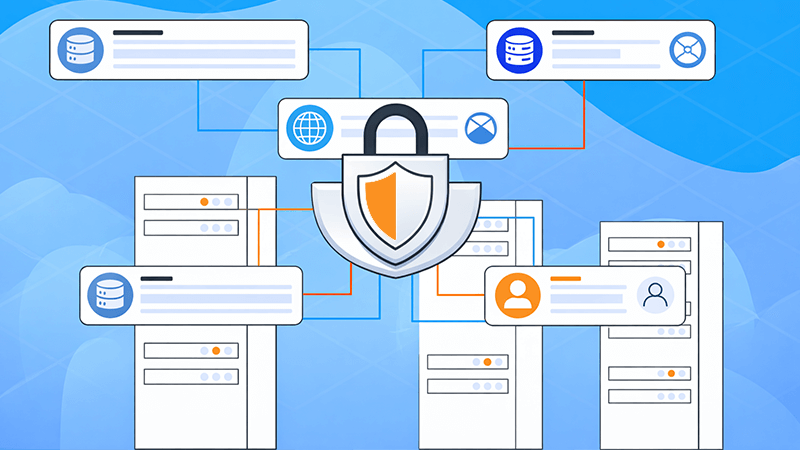
Data breaches and internal threats are no longer isolated events—they are persistent realities shaping the architecture of every dedicated hosting environment. Even with physical isolation and resource exclusivity, dedicated servers can become conduits for unauthorized lateral movement, especially as modern infrastructures grow more complex and interconnected. Traditional network segmentation, while effective in limiting broad access, often lacks the granularity to contain threats within specific workloads or applications. This leaves organizations exposed: a single compromised asset can still jeopardize entire business operations, sensitive customer data, and regulatory standing. As digital transformation accelerates and regulatory requirements around data protection intensify, businesses with dedicated servers face mounting pressure to enforce tighter security postures without sacrificing performance or operational flexibility.
Microsegmentation Security: Redefining Network Protection in Dedicated Environments
Microsegmentation security introduces a paradigm shift in how organizations approach protection within dedicated hosting. Instead of relying on broad, perimeter-based controls or static VLAN assignments, microsegmentation enables the division of a network down to the level of individual workloads, containers, or even processes. This granular approach ensures that each segment is governed by its own set of access policies—so if a threat actor manages to breach one segment, their ability to traverse laterally is sharply constrained.
Within dedicated environments, where mission-critical applications and sensitive data often reside, this approach fundamentally transforms risk management. It supports regulatory compliance by isolating assets subject to frameworks like PCI DSS, HIPAA, or GDPR, and provides a measurable reduction in the attack surface. Microsegmentation’s alignment with the Zero Trust model—where trust is never implicit, and every connection is verified—delivers a robust foundation for security in dedicated infrastructure.
Nuances of Deploying Microsegmentation in Dedicated Hosting
Deploying microsegmentation in a dedicated environment involves a multifaceted process that begins with comprehensive visibility. Asset discovery is critical: organizations must map every server, virtual machine, application, and data flow within their environment. This involves using advanced traffic analysis tools, dependency mapping, and behavioral analytics to identify not just what exists, but how assets interact and where potential vulnerabilities may arise.
Once the environment is mapped, the next step is risk assessment and classification. Not all segments hold equal value or risk. For example, a database containing customer payment information warrants stricter controls than a development sandbox. By classifying assets based on sensitivity and business impact, organizations can design microsegmentation policies that reflect real-world needs and compliance requirements.
Policy creation follows, utilizing principles of least privilege and role-based access control. Each segment is assigned access rules tailored to its function and risk profile. For example, only specific application servers may communicate with certain databases, and only authorized personnel may access administrative interfaces. Automation is key—dynamic policy enforcement ensures that as the environment evolves (new workloads, updated applications), security controls adapt in real time without manual intervention.
Network Microsegmentation Solutions: Host-Based, Network-Based, and Hybrid Approaches
There are several architectural strategies for implementing microsegmentation in dedicated environments:
- Host-Based Microsegmentation: This method leverages agents installed on servers or endpoints, which enforce security policies at the workload level. It offers deep visibility and control, making it ideal for environments with diverse or dynamic workloads. Host-based approaches can integrate with server management platforms, allowing for rapid policy deployment and granular monitoring.
- Network-Based Microsegmentation: Utilizing technologies such as software-defined networking (SDN), virtual local area networks (VLANs), or overlay networks, this approach segments the network at the infrastructure level. While it offers broad control and is less intrusive, it may lack the granularity of host-based solutions, especially in environments with high workload mobility.
- Hybrid Solutions: Many organizations opt for a hybrid model, combining host-level and network-level segmentation. This allows them to enforce policies at multiple layers, providing both comprehensive coverage and precise control.
Dataplugs’ dedicated server infrastructure is designed to support these varied approaches, offering clients flexibility in how they deploy and manage microsegmentation based on their technical and regulatory needs.
Best Practices for Microsegmentation Implementation
Effective microsegmentation implementation in dedicated environments requires an iterative, lifecycle approach:
- Continuous Visibility and Monitoring: Deploying microsegmentation is not a one-time project. It demands ongoing traffic monitoring, behavioral analysis, and asset inventory to ensure policies remain relevant and effective. Modern platforms integrate monitoring with SIEM and threat intelligence tools for real-time anomaly detection.
- Granular Policy Definition and Enforcement: Policies should be as specific as possible, minimizing permitted communications to only what is strictly necessary. This includes both internal east-west traffic and external connections. Automation tools can assist in generating, testing, and enforcing these policies at scale.
- Seamless Integration with Existing Security Controls: Microsegmentation should complement, not replace, traditional defenses such as firewalls, intrusion prevention systems, and DDoS mitigation. Coordinated enforcement across all layers ensures that no segment becomes an unmonitored gap.
- Regulatory Alignment and Audit Readiness: Detailed logs, audit trails, and compliance documentation are essential for proving that segmented environments meet regulatory mandates. Microsegmentation not only helps reduce the scope of compliance audits but also simplifies response to audit requests by isolating and clearly documenting access to regulated data.
- Performance Optimization: Security should never come at the expense of performance. Monitoring tools must validate that segmentation policies do not introduce latency or disrupt legitimate business processes. Dataplugs’ infrastructure, built for high throughput and low latency, supports advanced segmentation without compromising service quality.
Microsegmentation for Compliance and Risk Reduction
Compliance with global standards is a top priority for enterprises managing dedicated infrastructure. Microsegmentation directly addresses this challenge by enabling organizations to isolate regulated workloads, strictly control access, and demonstrate compliance with PCI DSS, HIPAA, GDPR, and more. By restricting the scope of compliance environments, businesses can significantly reduce audit complexity and costs. Moreover, the granular visibility afforded by microsegmentation enhances incident response, enabling security teams to pinpoint where an anomaly occurred and limit the impact of breaches.
Operationalizing Microsegmentation in the Real World
Deployment success hinges on operational maturity. Organizations must invest in training, process refinement, and automation to ensure that segmentation strategies are consistently applied, updated, and aligned with evolving risk landscapes. Regular reviews, penetration testing, and red teaming exercises help validate the effectiveness of segmentation controls.
Dataplugs’ dedicated hosting solutions provide the foundation for this operational excellence. With high-availability data centers in Hong Kong, Tokyo, and Los Angeles, direct Tier-1 connectivity, and 24/7 technical support, clients can confidently deploy and manage advanced segmentation strategies—knowing their infrastructure is both resilient and secure.
Conclusion
Microsegmentation in dedicated environments is not just a technical upgrade—it is a strategic evolution that aligns security architecture with the realities of modern threats and compliance pressures. By embracing granular segmentation, dynamic policy enforcement, and continuous visibility, organizations can transform their dedicated hosting into a fortress of operational agility, regulatory readiness, and advanced threat defense. Dataplugs stands as an enabler on this journey, offering the expertise, infrastructure, and support needed to operationalize microsegmentation and build a future-proof security posture. To explore how microsegmentation security can elevate your dedicated environment, connect with Dataplugs’ technical team via live chat or email sales@dataplugs.com.