Clients and stakeholders often ask, “How long till my website (page) ranks on top of Google?” You could say “it depends” and give a lecture on all the variables like quality of the content, website strength, resources, competition… or you can use the data below.
I want to give a huge thanks to our data scientist Xibeijia Guan for doing all the hard data parts of this study, and to our CMO Tim Soulo for his input. Let’s dig in.
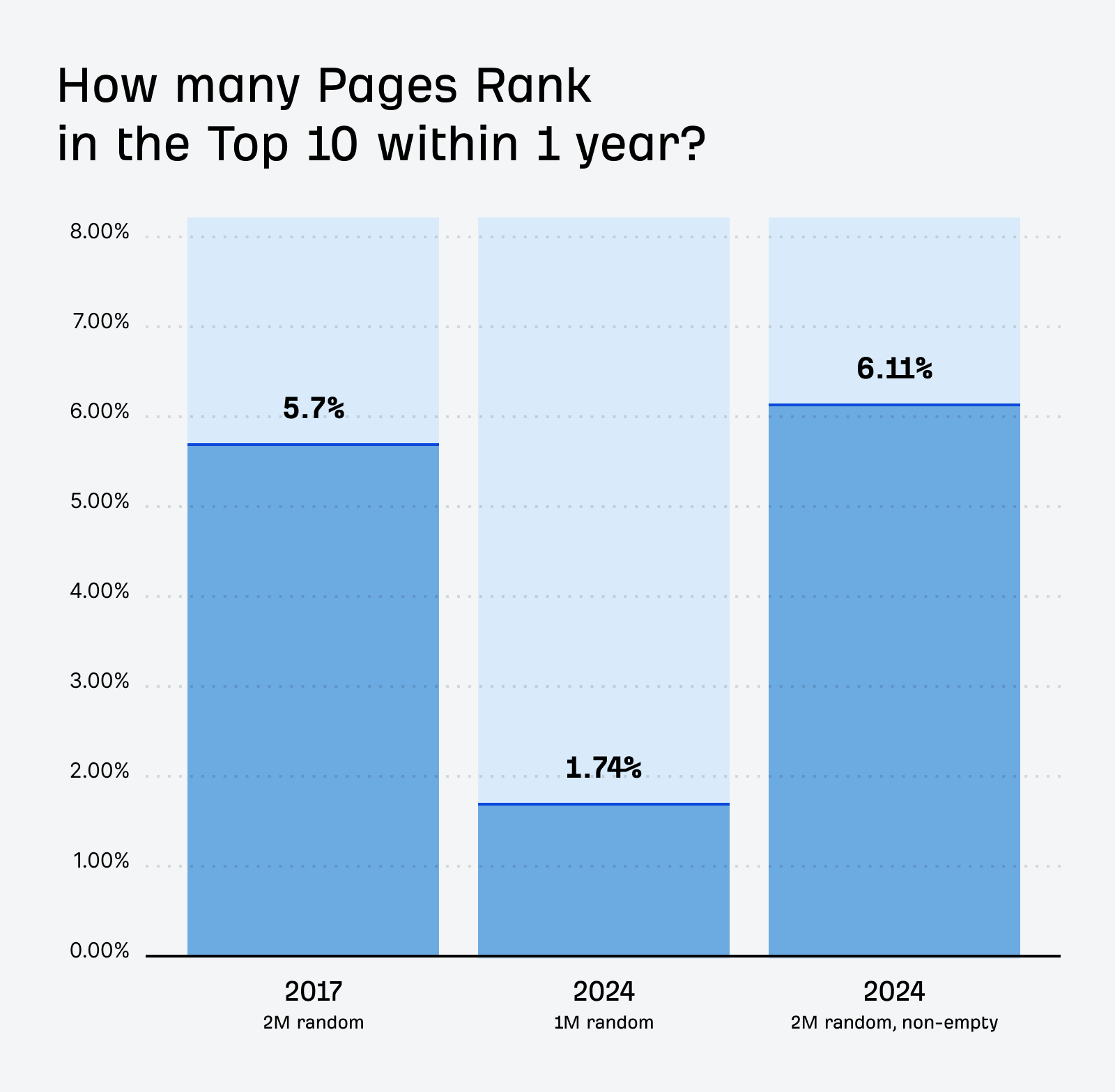
We took 1M random URLs seen by our crawler in September 2023 and looked if any of them made it to the top 10 within a year.
Only 1.74% of them did. 98.26% of them did not. That’s way down from 5.7% in 2017.
Filtering a different way and looking at 2M random URLs created in October 2023 and only non-empty English content, 6.11% of them made it to the top 10 within 1 year. This might be a more fair number to use.
If a page was going to rank for a higher search volume term, it was more likely to do it in the 1st month. Lower search volume terms were more evenly distributed.
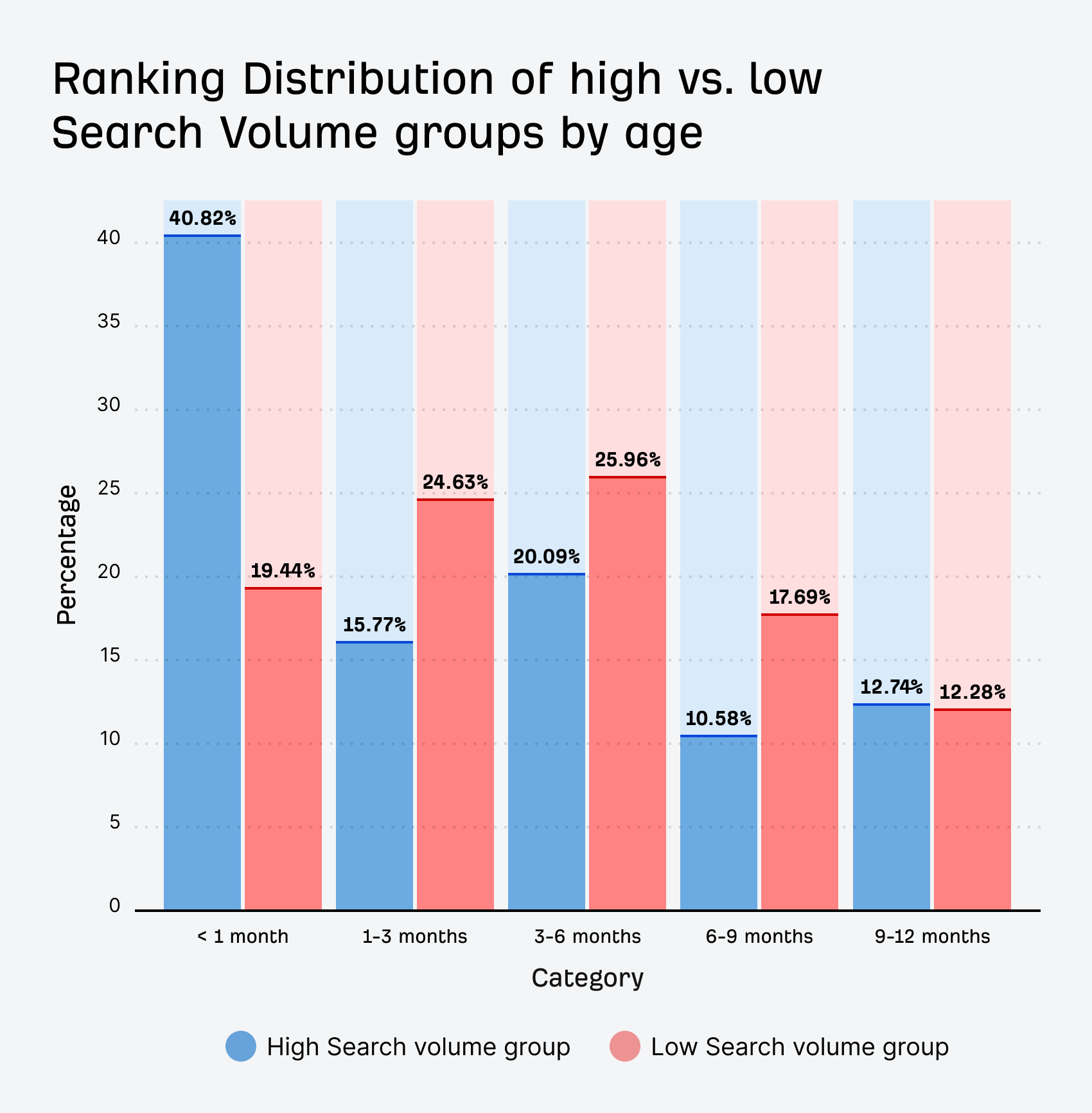
After ~6 months, you may want to look at updating your content if you’re still not in the top 10. Your chances are pretty low after that unless you make some changes.
If we look at the shortest amount of time it took for these pages to rank in the top 10, the data shows it takes longer to rank for high-volume keywords compared to low-volume keywords.
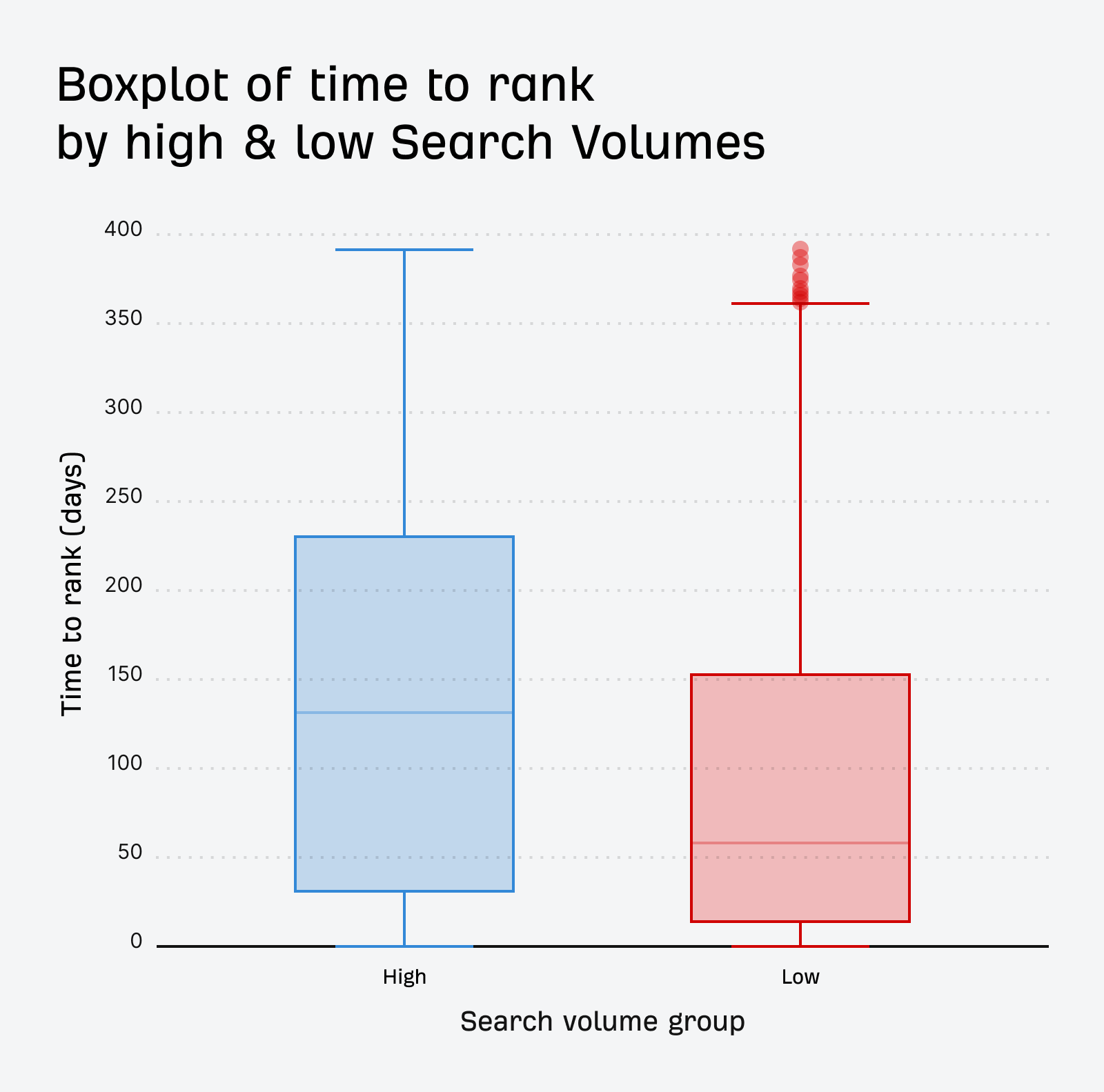
Interestingly, it’s faster now to rank for high volume keywords than it was in 2017, but keep in mind that 94% of the pages never actually ranked for high volume keywords at all.
To answer this question we took 1.3 million random keywords (in the US) and looked at the top 10 ranking URLs. We looked up each of those URLs in Ahrefs, to find the date when this URL was first seen by Ahrefs crawler.
The SERPs are dominated by older pages. 72.9% of pages in the Top 10 are more than 3 years old vs 59% in 2017.
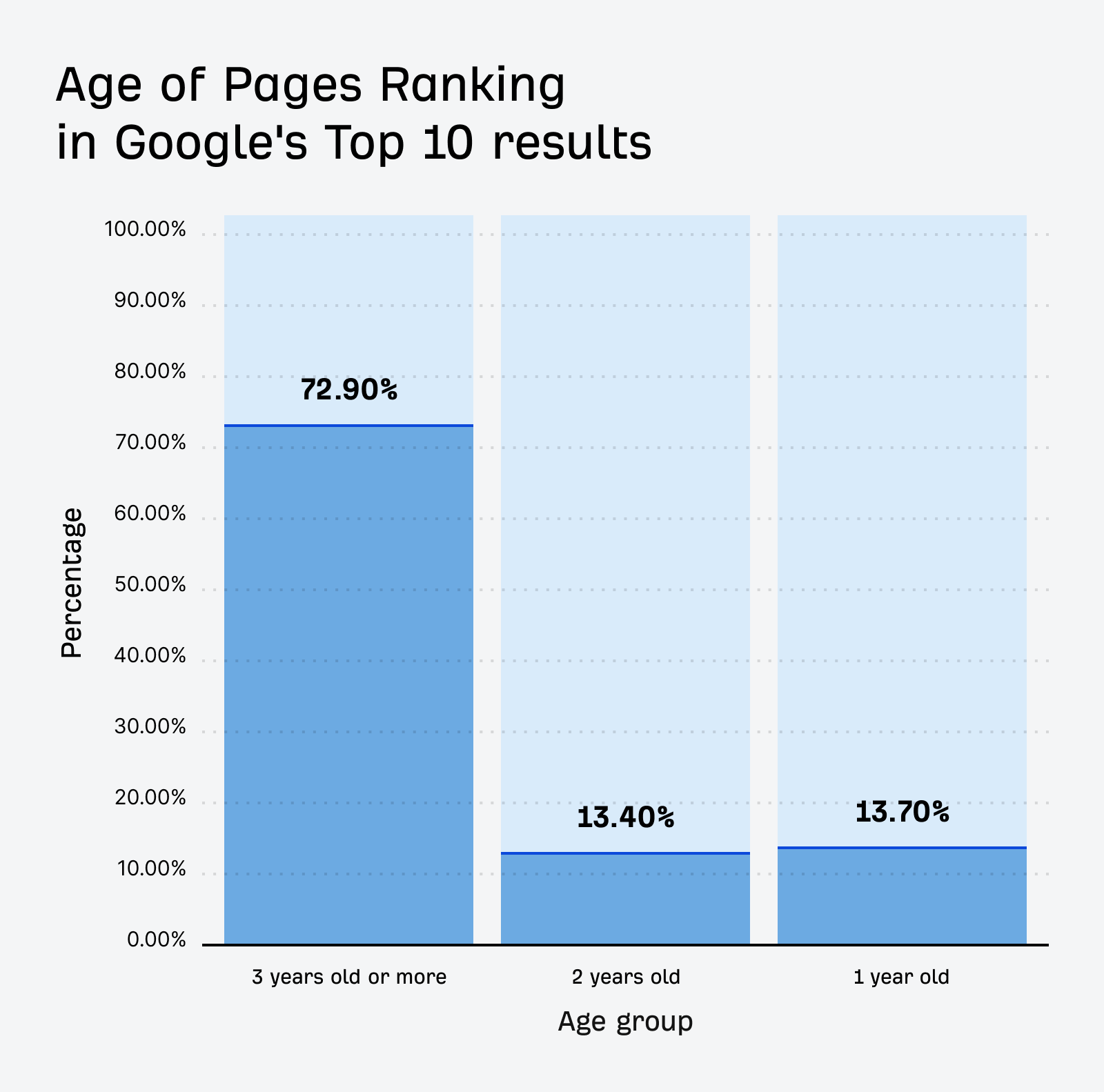
13.7% of the pages seen in the top 10 were under 1 year old, which is down from 22% in the 2017 study. It seems it may be harder for new pages to break into the top 10, but some of the difference here could just be due to the sampled data.
We also saw a clear correlation between the age of the page and how high it ranks in Google:
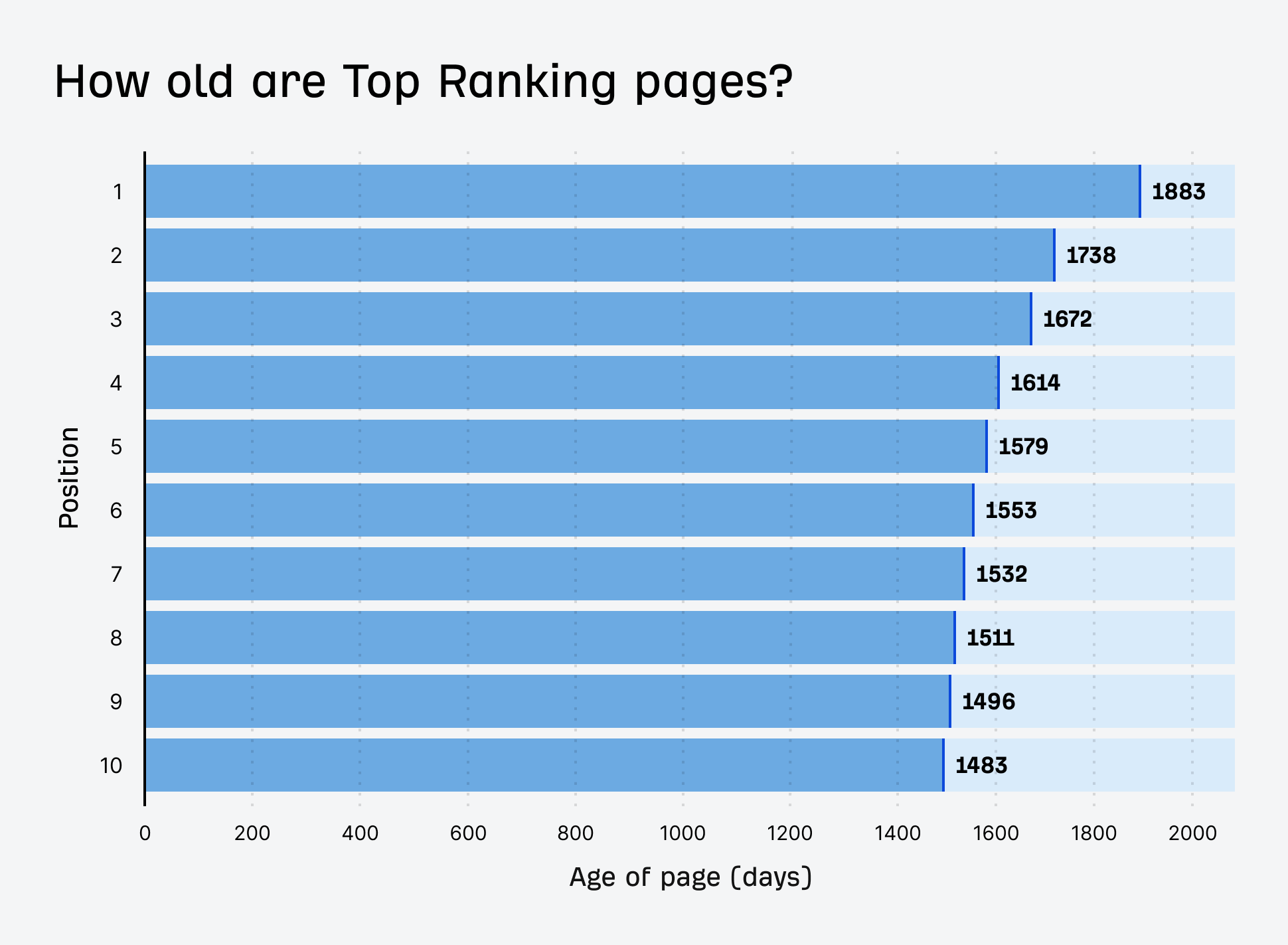
On average, the #1 ranking page in Google is 5 years old. Back in 2017, this was just 2 years old.
Final thoughts
Older content dominates. If you want to rank in Google’s top 10, focus on creating evergreen content that can stand the test of time and plan to update it. It likely took a lot of effort for the 1.74% of new pages ranking in the top 10 to get there. Don’t expect to put out mediocre content and rank for competitive terms.
Similar Posts
The Problem with Caleb & Brown (No One Talks About This)
Get a Tangem Wallet (20% OFF): https://tangem.com/pricing/?promocode=CYBERSCRILLA&promocode=BLOOMX26 Try Caleb & Brown: https://app.calebandbrown.com/signup?referrer=242JMXU What’s actually better for…
The OceanWP Creator Is Back: How Nicolas Lecocq Built 6 New WordPress Products With AI
If you’ve been part of the WordPress community for a while, then you’ve almost certainly heard…
[NEW] How to Use Meta’s WhatsApp AI Agent in WordPress
Meta started rolling out its WhatsApp AI agent (officially called Meta Business Agent) to eligible businesses…
Trust Wallet Users Lose $7M In Hack (everything you need to know)
Tangem is the best cold wallet for beginners. Get it here for 10% off: https://tangem.com/en/pricing/?promocode=CYBERSCRILLA#pricing Here…
8 AI Rank Tracking Tools to Try in 2027 (Cost per Prompt, Key Features)
AI rank tracking tools help you see how often ChatGPT, Gemini, Google AI Overviews, and other…
Best Practices to Secure Your Dedicated Server 2025
Cyber threats are smarter and stronger in 2025. Keeping server security tight is crucial for your…