An AI agent is a software system that uses artificial intelligence to pursue a goal and complete tasks on your behalf.
Unlike a chatbot that simply answers what you ask, an agent can break a goal into steps, make decisions, use tools, and take actions across multiple steps, with little or no human intervention along the way.
If a chatbot is someone who answers your question, an agent is someone who goes off and gets the job done and comes back with the result.
But the word agent now gets attached to almost everything, from basic chatbots to fully autonomous systems, so it’s worth being clear about what actually makes something one.
Running quietly under all four steps is memory:
- Short-term memory holds the context of the current task. On a 5,000-page crawl, which pages it has already visited, so it never repeats one or loses its place.
- Long-term memory persists across sessions, carrying past results, preferences, and learned facts. So, the next time it already knows which “broken” links you’ve told it to leave alone (say, an old URL you keep on purpose) and which parts of the site to check first.
The output isn’t a chat reply you still have to act on. It’s a finished, verified list: each broken link, the page it’s on, and its status code.
Put the loop, the LLM, tools, and memory together and you get the traits that define an agent: autonomy (it acts without step-by-step instructions), goal-orientation (it works toward an outcome), and adaptability (it adjusts when something doesn’t work).
An agent does the job, rather than just describing it.
If you’re not sure what to start with yet, I highly recommend Agent A. Agent A is a marketing agent — it works exactly like Claude Code, but supercharged with all of Ahrefs’ datapoints (even ones not in the API).
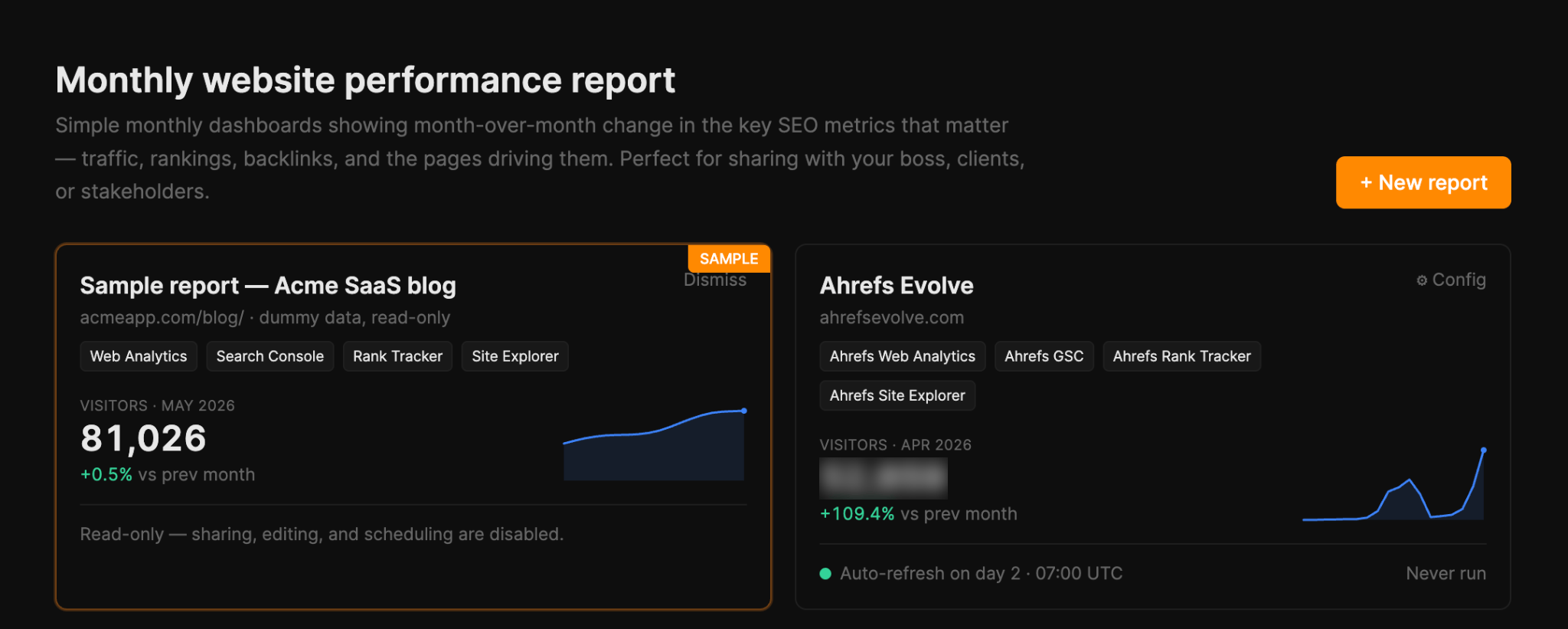
Just pick a repetitive job you already do by hand and ask Agent A to automate it for you. For example, Ryan, our Director of Content Marketing, has to publish a monthly website performance report for our CMO.
So, he got Agent A to do it for him:
Many agents can also be taught new tricks with skills: short instruction files that package how to do a specific job so it’s done the same way every time. Agent A ships with prebuilt skills for common marketing tasks, and you can write your own.
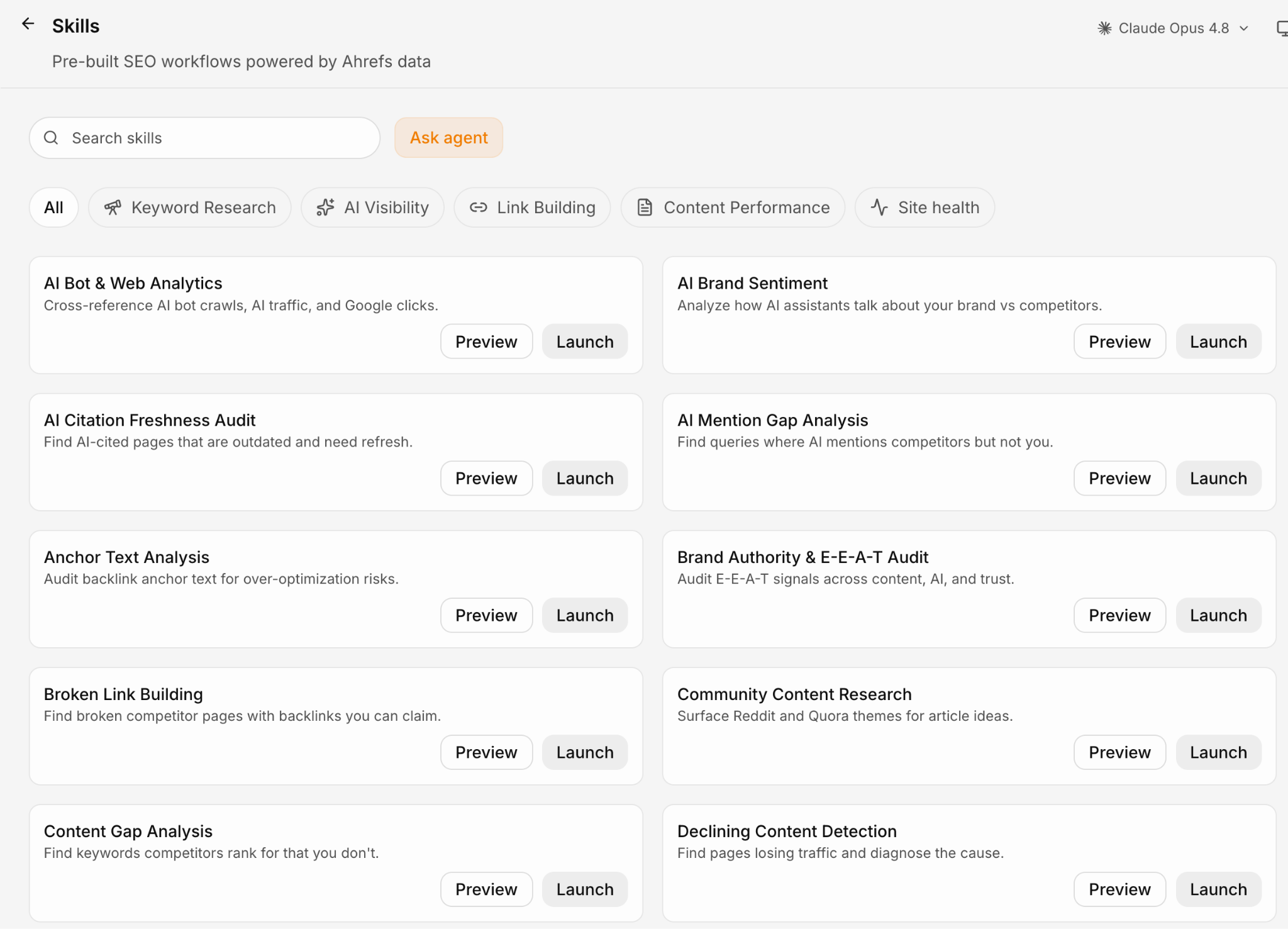
If you need ideas on what to automate or build with Agent A, here are some cool examples:
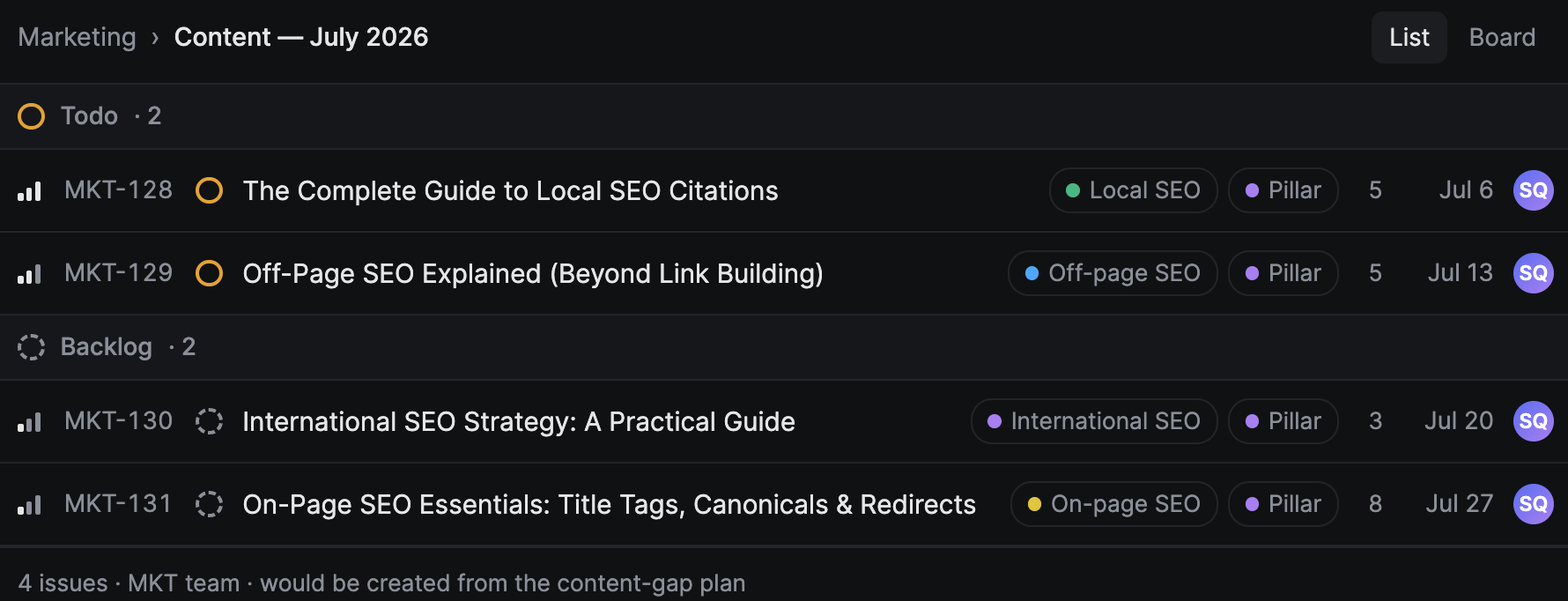
Reading about agents only gets you so far. Here’s an end-to-end walkthrough using Agent A to turn a vague goal — “find what my competitor ranks for that I don’t, and tell me what to write next” — into a finished content calendar.
The five steps generalize to almost any AI agent.
Step 1. Tell it what you want in plain English
You don’t have to configure anything or learn a new programming language. Just type what you want:
“Compare my site to competitor.com. Find the topics they get search traffic from that I’m missing, and draft a content calendar for next month.”
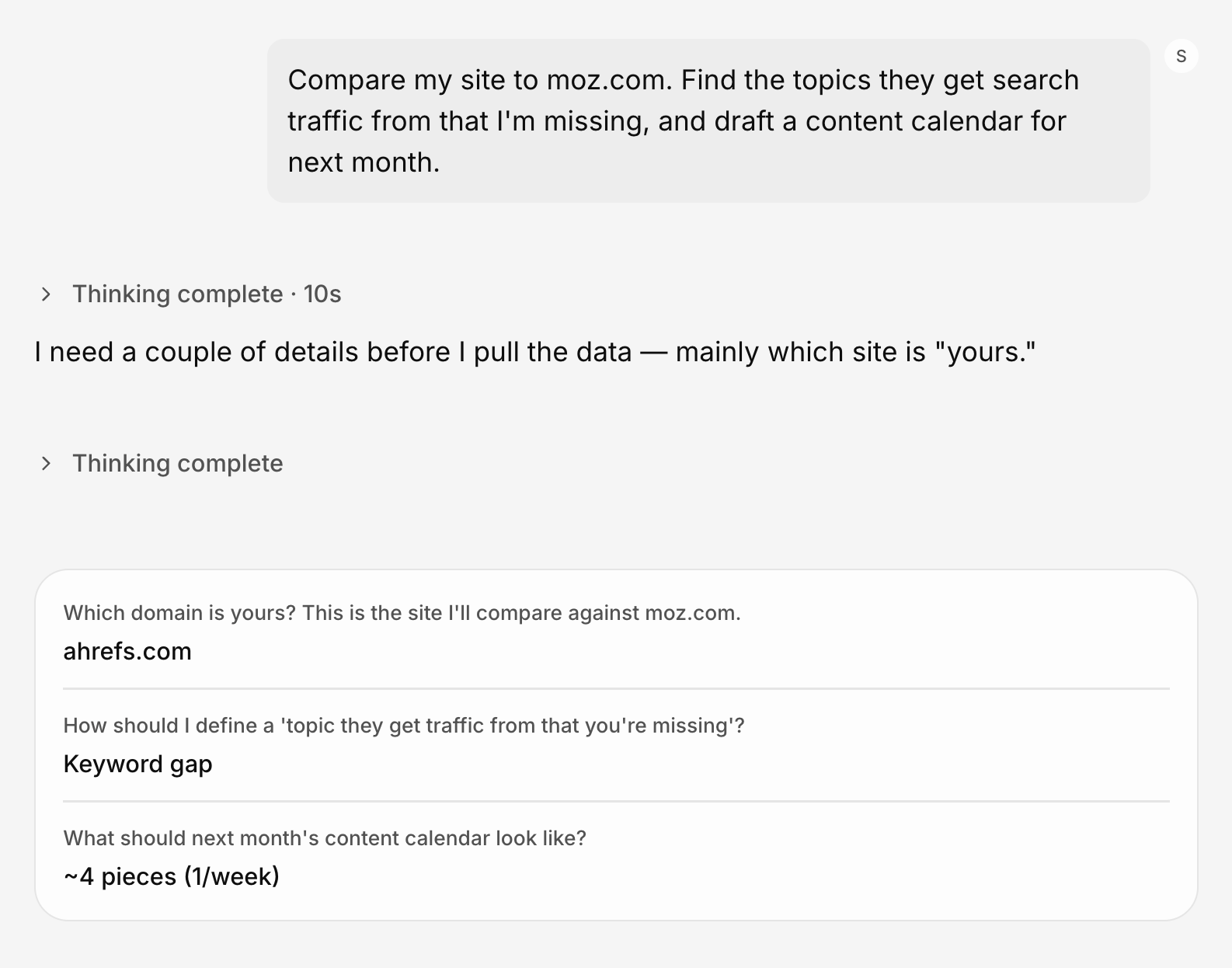
After clarifying what you need, Agent A goes and does its job.
Step 2. Let it do the research
This is where an agent earns its keep.
Before it produces anything, it does the legwork you’d normally dread: pulling data from every source it can reach, cross-referencing it, running the analysis, and surfacing what actually matters.
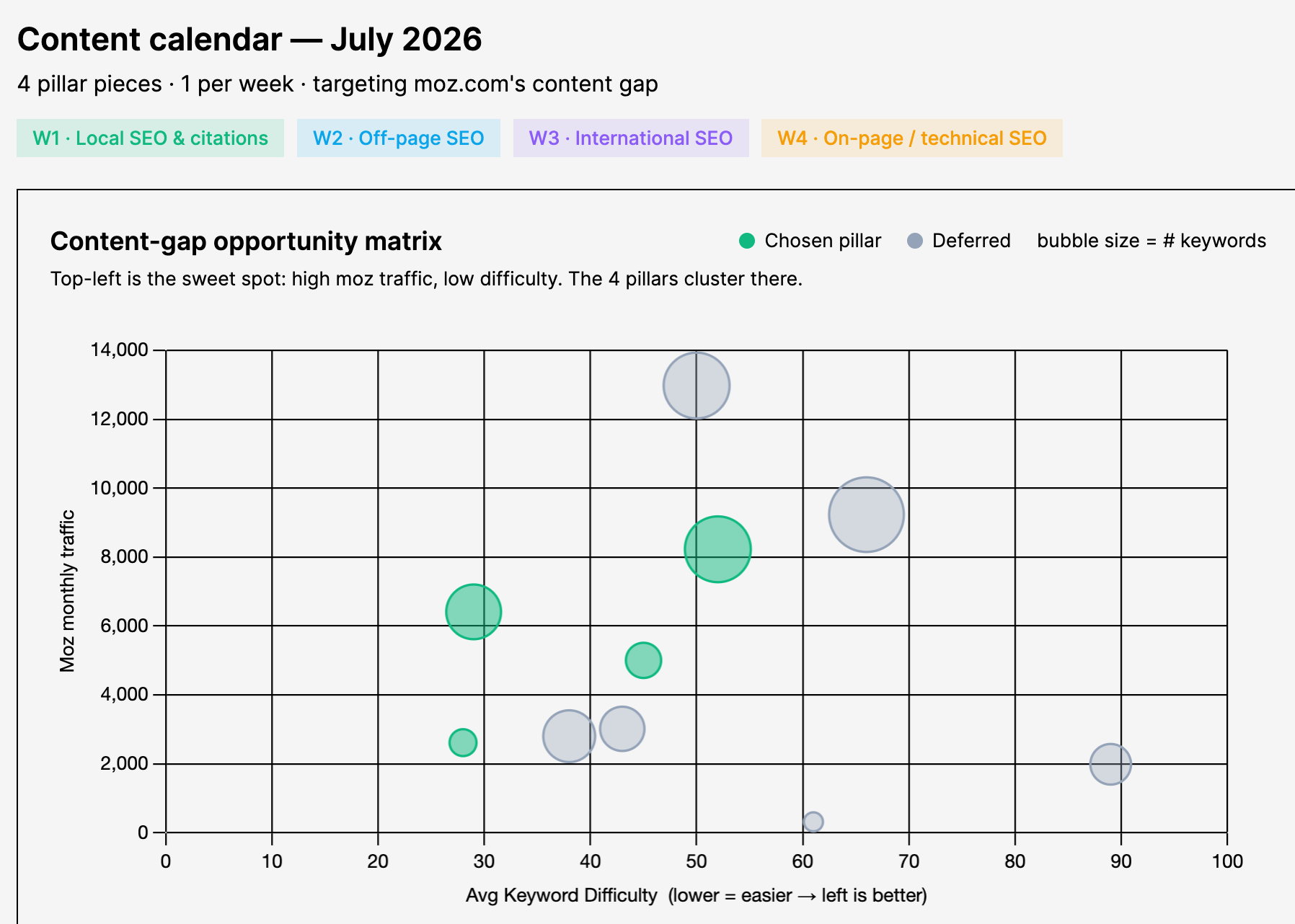
Because it has all Ahrefs data, the agent is able to pull live ranking data for both sites (the same data behind the Ahrefs interface), find the keywords your competitor ranks for that you don’t, and cluster them into topics.
Step 3. Get the result
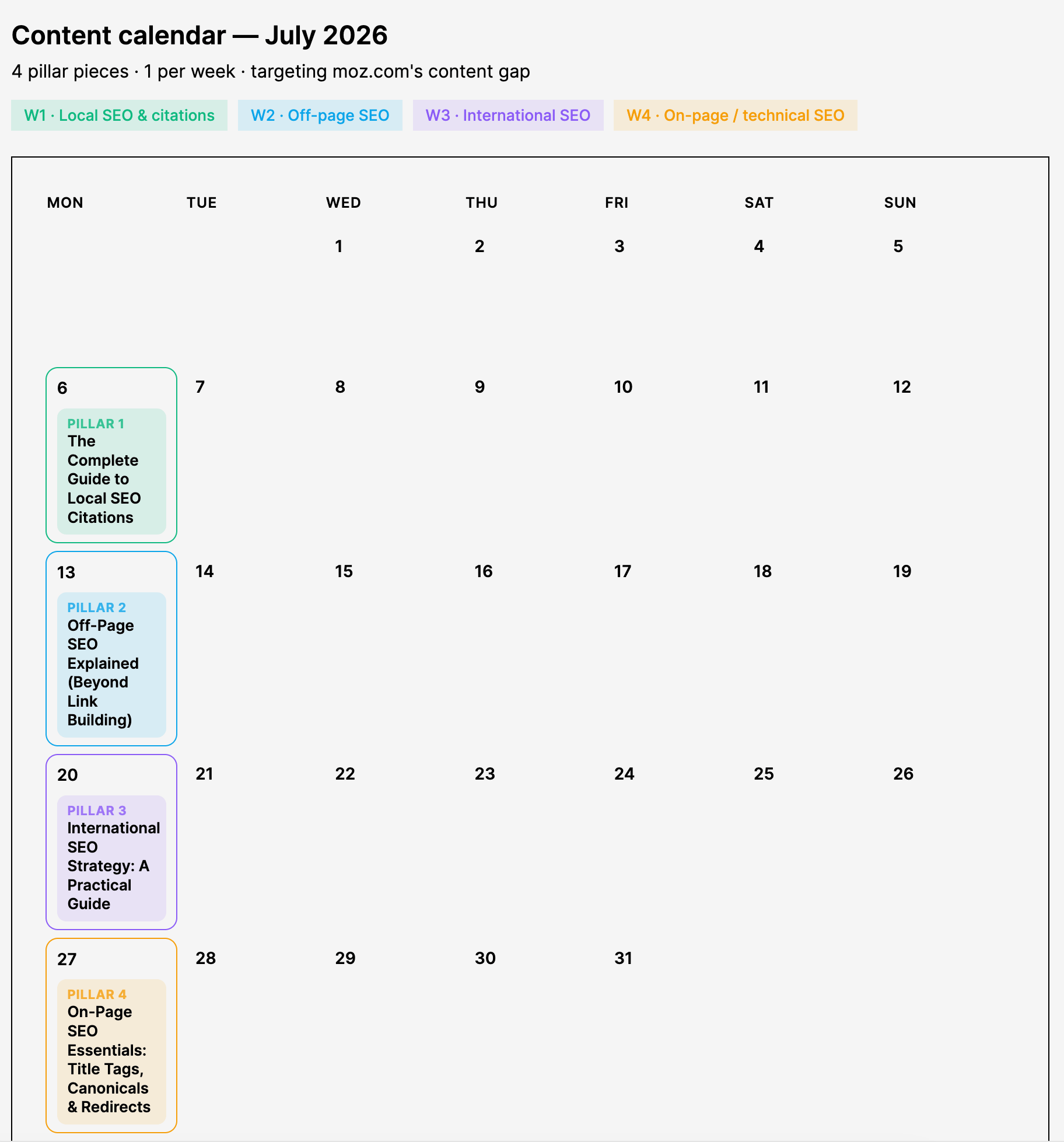
Then it hands you something finished — a report, a plan, a draft — built from that research, not a pile of raw data for you to sort out yourself.
Step 4. Keep refining with follow-ups
Just because the agent did everything for you doesn’t mean it’s always correct.
This is where taste and expertise comes in. You review what the agent did and see if there’s anything that’s bad or not up to your standards.
Then because the agent holds context, you steer instead of starting over. Tell the agent what’s bad or not so great, e.g., “Drop anything with a difficulty above 40, and add a suggested title for each.”, and then let it revise what it did.
Step 5. Push it into your real workflow
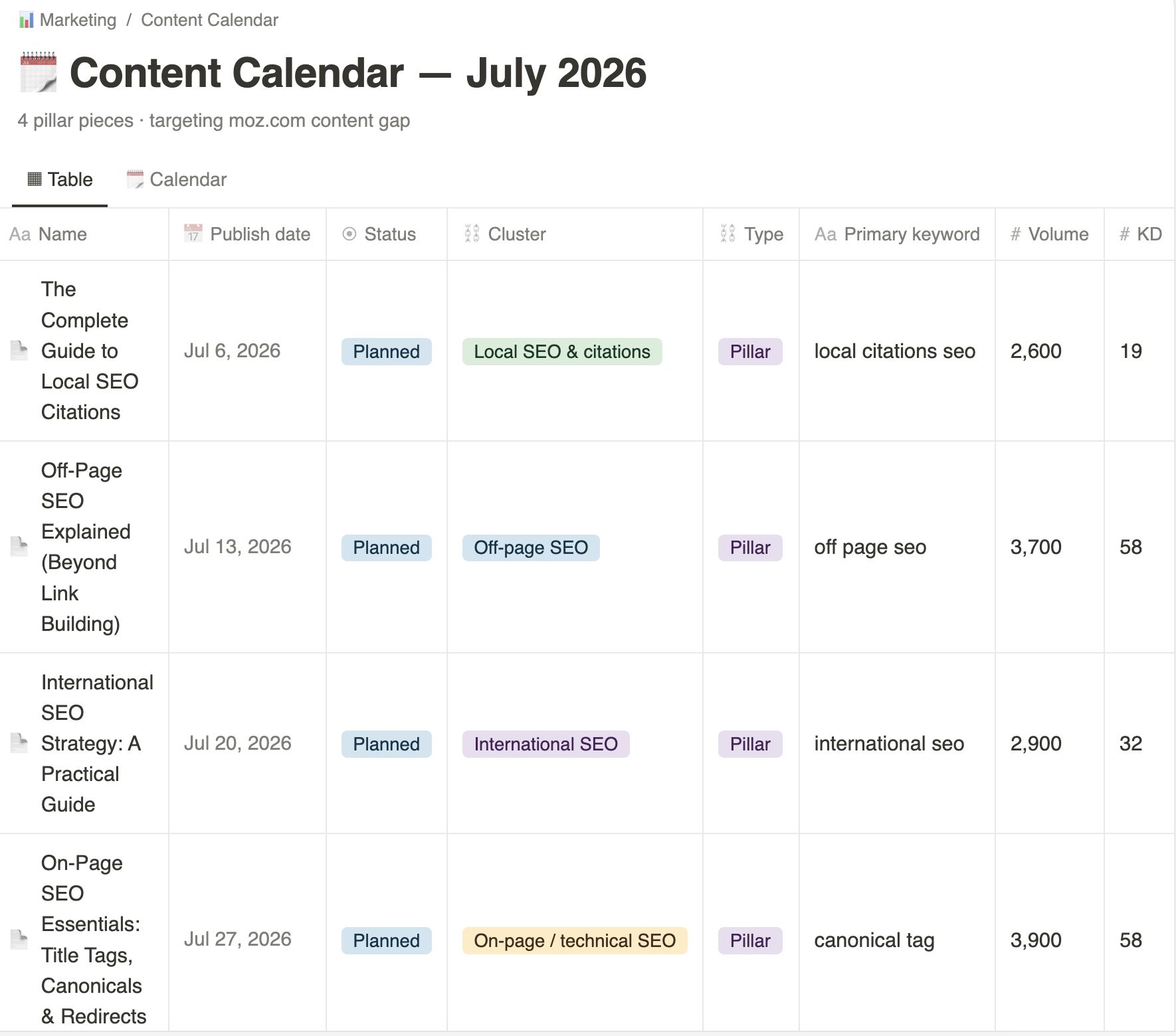
Once you’re happy, ask the agent to write the calendar into Notion, create the tasks in Linear, or post a summary to Slack.
Agent A connects to those plus HubSpot, WordPress, Mailchimp, and more out of the box.
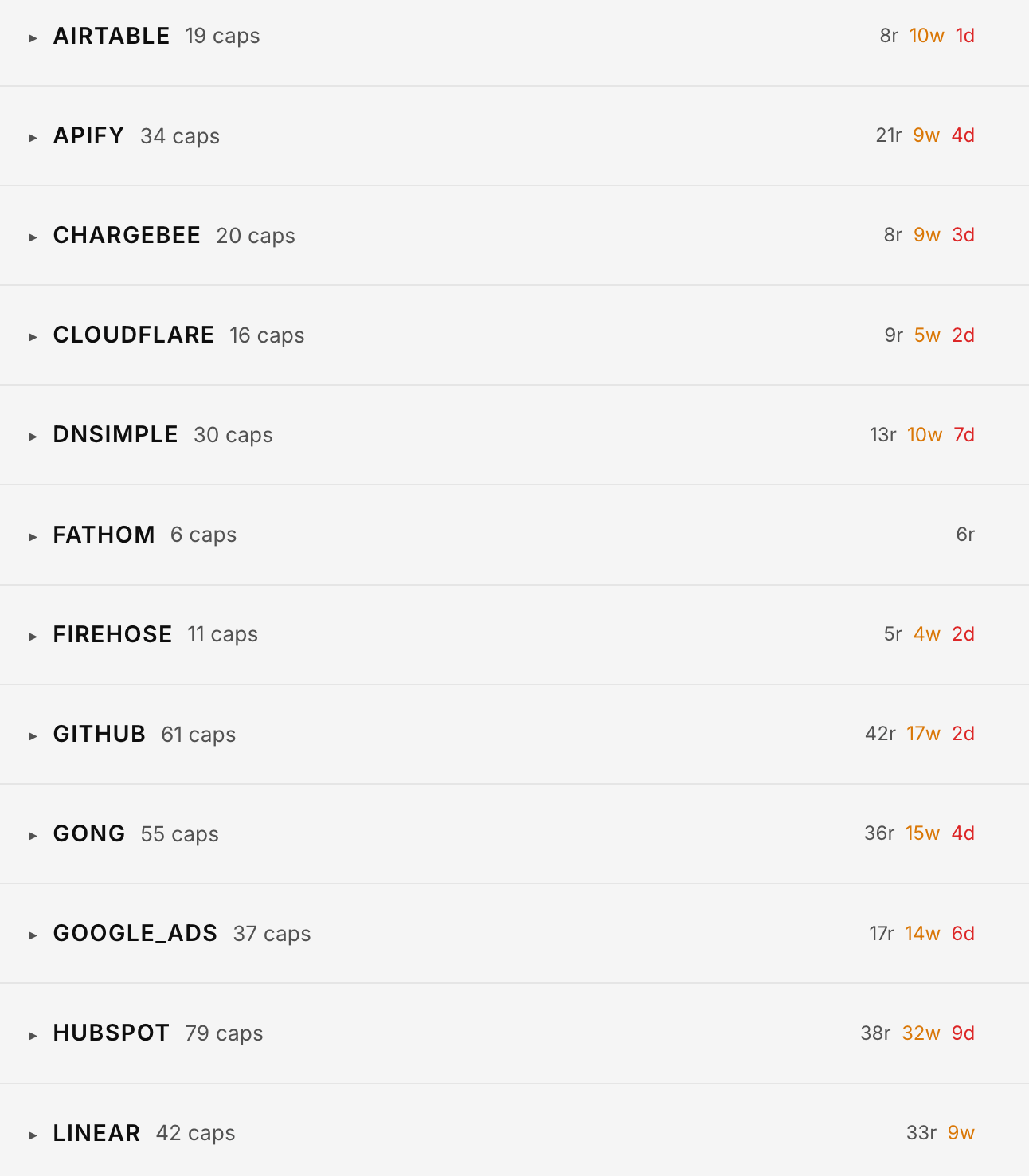
Make it automated so you don’t have to think about it constantly.
Final thoughts
An AI agent is a straightforward idea: software that doesn’t just answer, but acts. It takes a goal, breaks it into steps, uses tools to do the work, and checks the result, repeating until the job is done.
For marketing, the multi-step chores that pile up, the boring stuff that you hate to do (auditing a site, keyword research, chasing broken links, drafting outreach) are exactly the kind of work an agent can take off your plate, working from real data instead of guesses.
So, don’t be afraid and just start. Give it a plain English instruction and see how far you can take it.
And if you’re an Ahrefs customer, you get to try Agent A for free for a month.
Similar Posts
How Does Route Flapping Affect International Network Stability?
When overseas users report random slowness, session drops, or unstable application performance, the root cause is…
14 Ways I Get More Donations for My Nonprofit (I’ll Show You How)
A while ago, I built a nonprofit website that looked great and quickly started getting good…
AliExpress affiliate automation with Grok 3 AI reviews and XLS feed import
AliExpress has long been one of the top sources for affiliate marketing. But if you think…
Simplifying Security with SSL Wildcard Certificates
In the fast-paced world of digital business, securing every touchpoint of your online presence is essential—not…
How Hackers Steal Bitcoin (Don’t Make These Mistakes)
Need a cold wallet for your Bitcoin? I linked the best 2 options below. → If…
Sabey Partners With OptiCool to Advance AI Data Center Cooling
Sabey Data Centers has entered into a strategic partnership with OptiCool Technologies to accelerate the deployment of advanced…