Everyone’s talking about the traffic they’re losing to AI. Fewer people are talking about the traffic they’re gaining from it.
When ChatGPT, Perplexity, or Claude cites your content in a response, some of those users click through the citation and visit your website. That’s AI chatbot traffic, and it may convert better than most channels you’re probably already tracking.
Here’s which AI assistants send the most AI traffic, how to measure it, and how to get more of it.
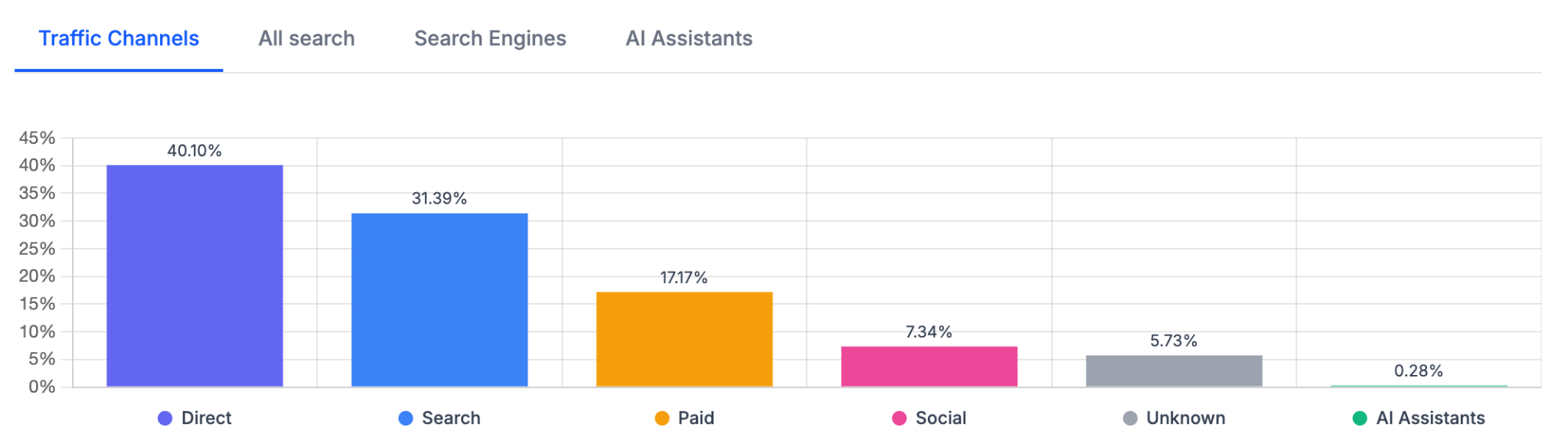
But Google’s share has been eroding. It dropped from 35.11% in June 2025 to 30.53% in March 2026—a 4.58 percentage point decline in ten months. At the same time, Detailed.com has reported that only 18% of large publishers experienced year-over-year traffic growth in early 2025, largely due to shifts in AI-driven search.
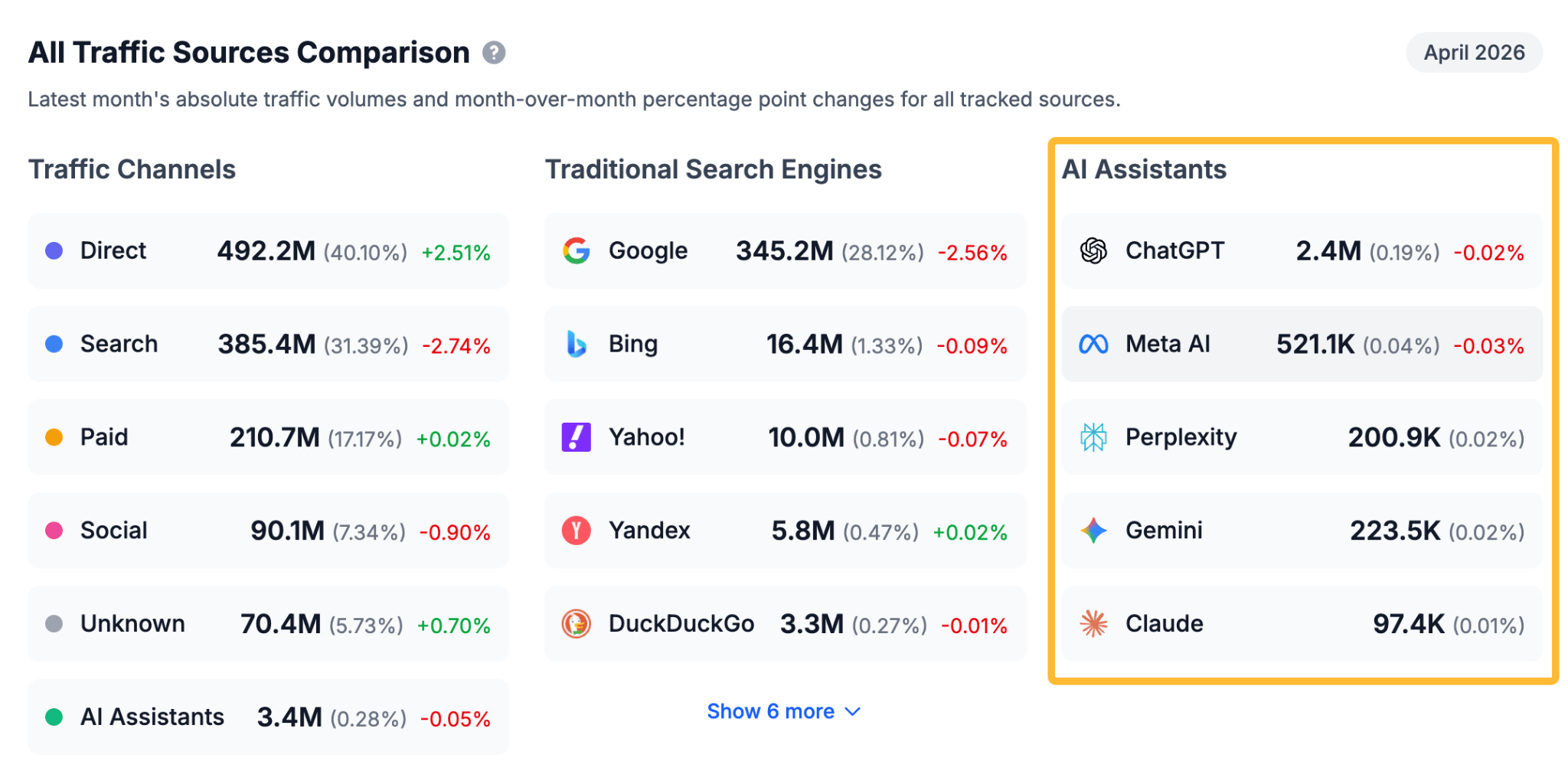
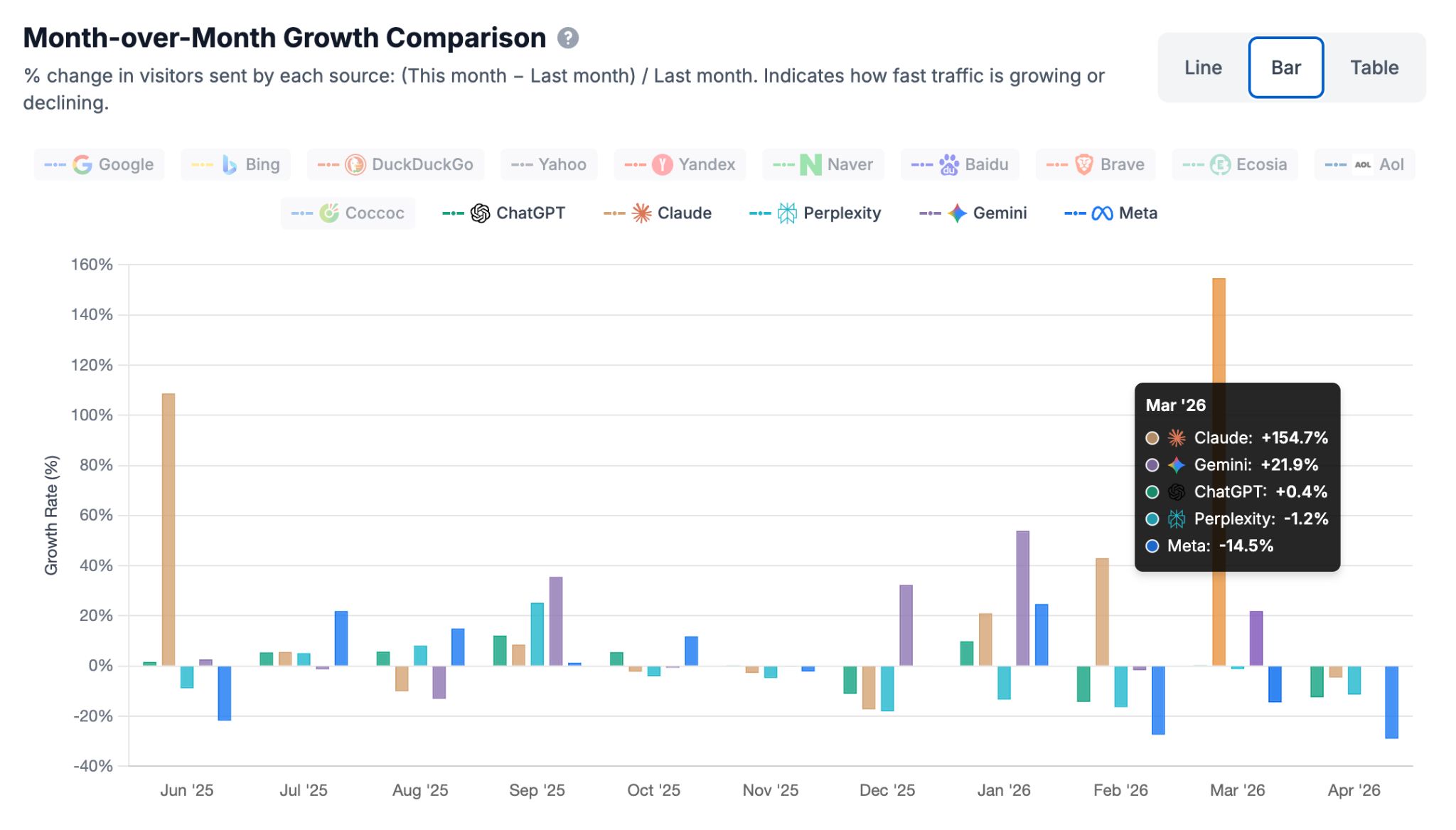
But the growth numbers tell an interesting story, too. Claude grew 153.5% month-over-month in March—attributed to Anthropic expanding its web search capabilities—with an average growth rate of 30.7% over the tracked period.
Gemini grew 21.2% in March, averaging 12.8% growth. ChatGPT is the volume leader, but it’s the slowest-growing of the four, with a 1.4% average growth rate. Perplexity sits at 2.9%.
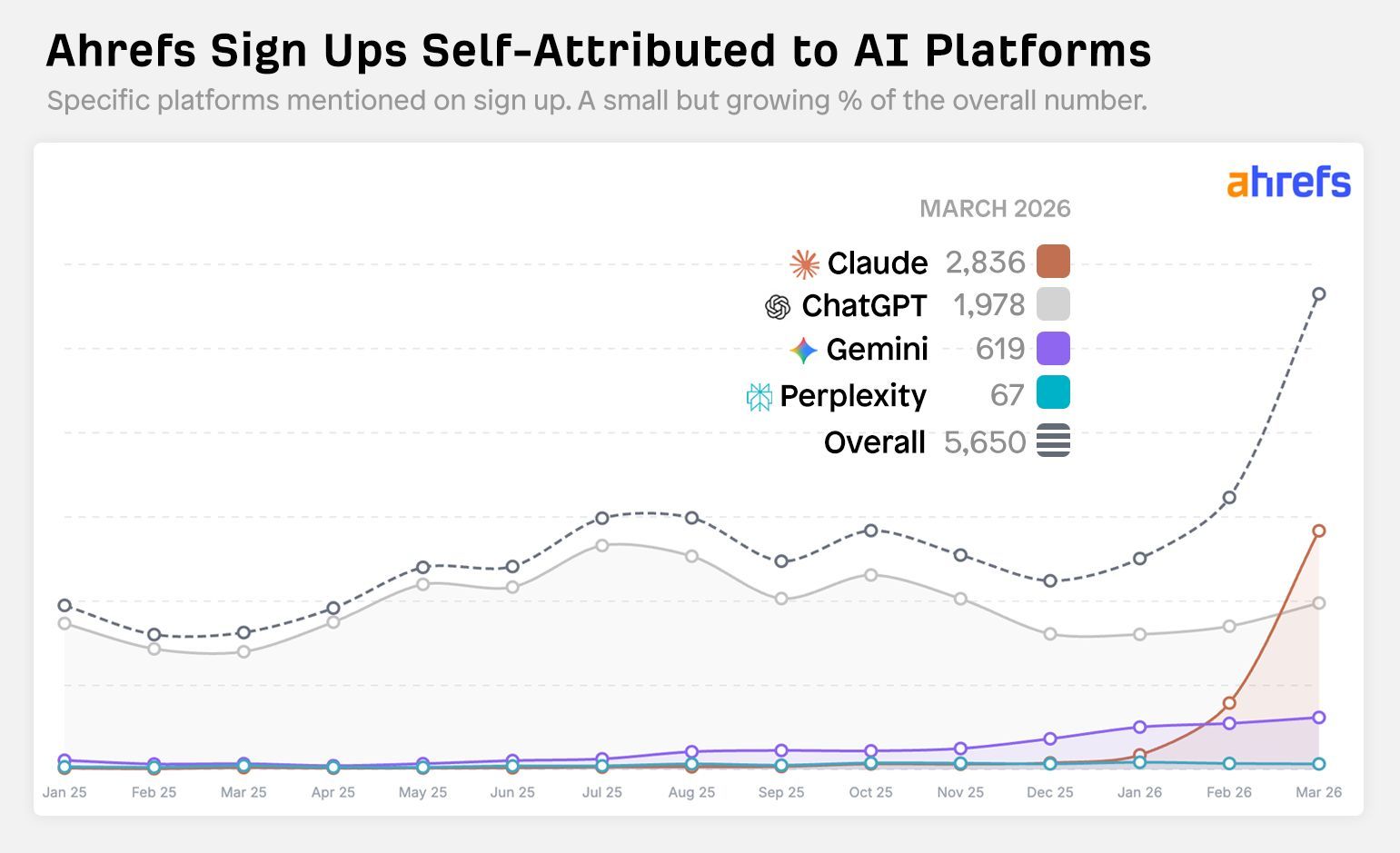
We also track sign-ups self-attributed to AI at onboarding: March 2026 was a record month, with ChatGPT credited by 1978 new users, Claude by 2,836, Gemini by 619, and Perplexity by 67—with Claude growing fastest.
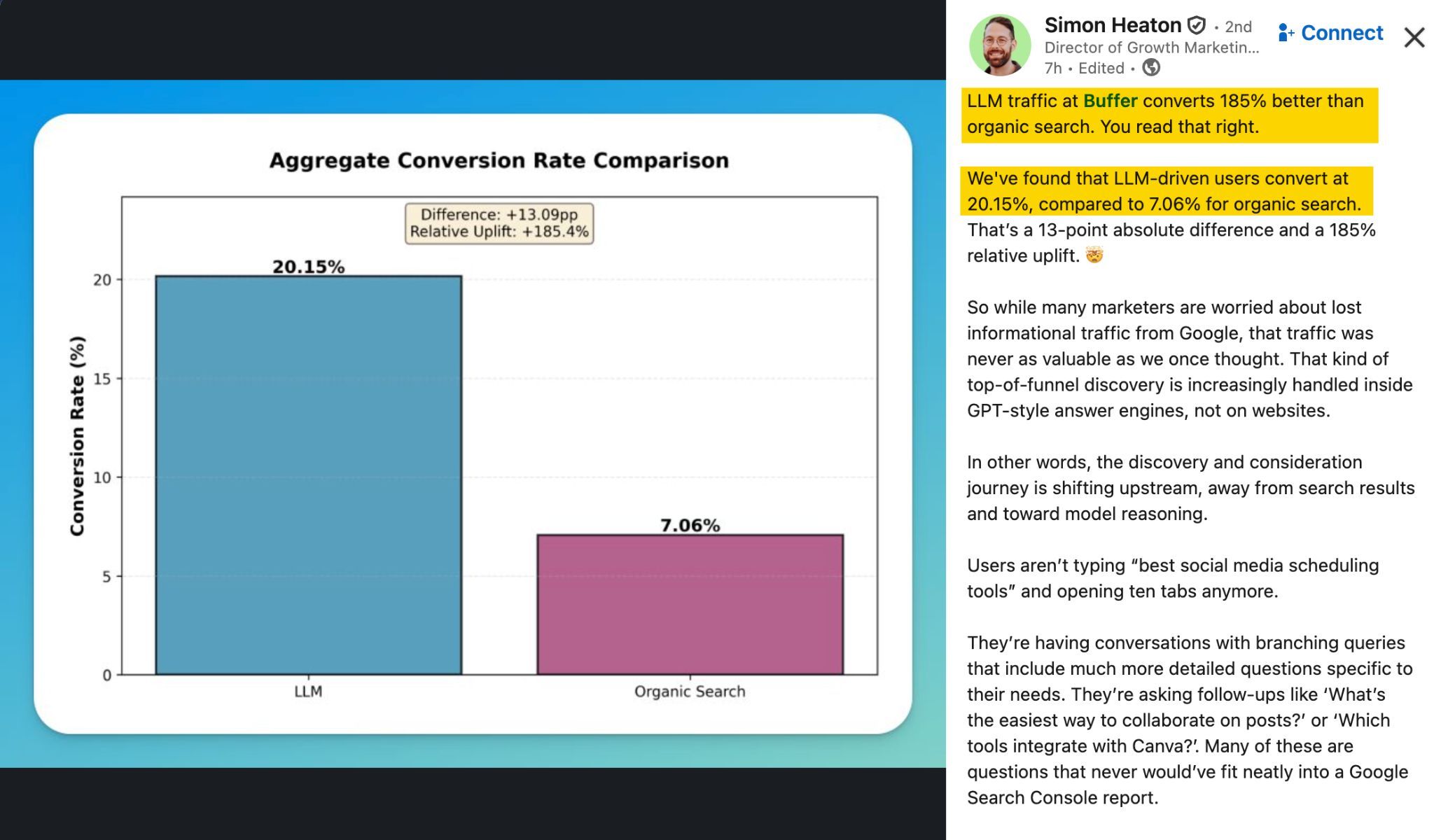
I’ve seen many stories like that shared directly by companies on LinkedIn. Here’s another one from Simon Heaton, Director of Growth Marketing at Buffer: conversion rates 185% higher than organic search.
One of the reasons why this type of traffic often converts better is that the AI already does some product research for the customer. Someone who clicks a citation in a chatbot response has already received an AI-generated answer and decided they want more. That’s a deliberate click. Compare it to someone who followed a display ad or clicked a social post while scrolling.
In fact, Kevin Indig’s study of 48 participants making high-stakes purchases found that 64% of AI Mode users clicked nothing at all—they got their answer without leaving the chatbot. Of the 23% who did click through, most visited to confirm a choice already made, not to explore options. So, AI-referred visitors who land on your site have typically already decided. It’s more verifying before the purchase than browsing.
Here are a few ideas on exploring that data in a practical way.
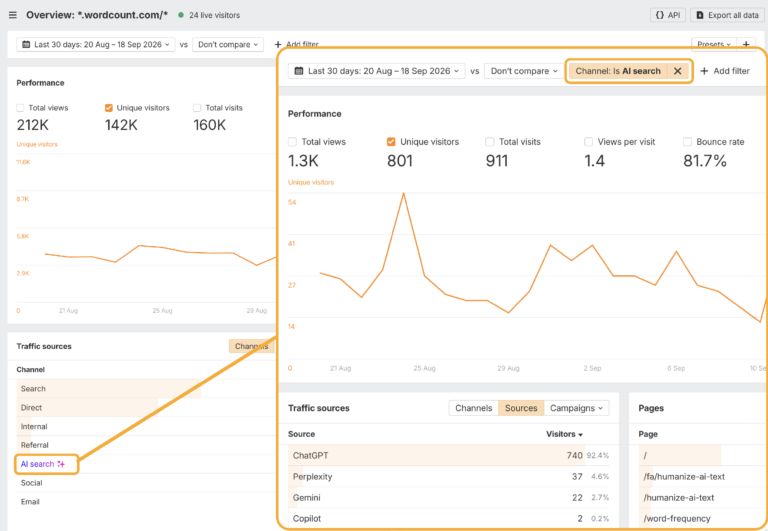
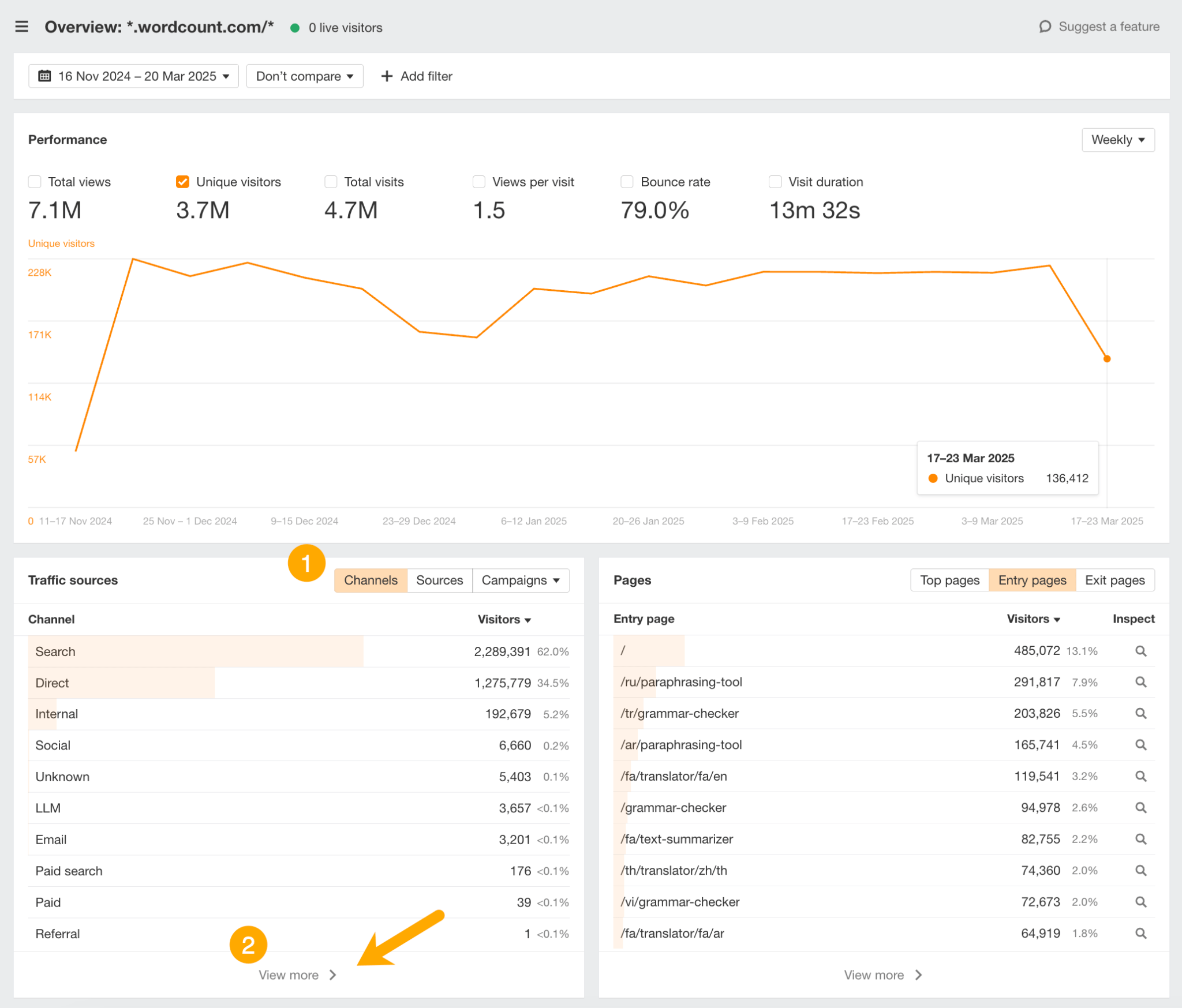
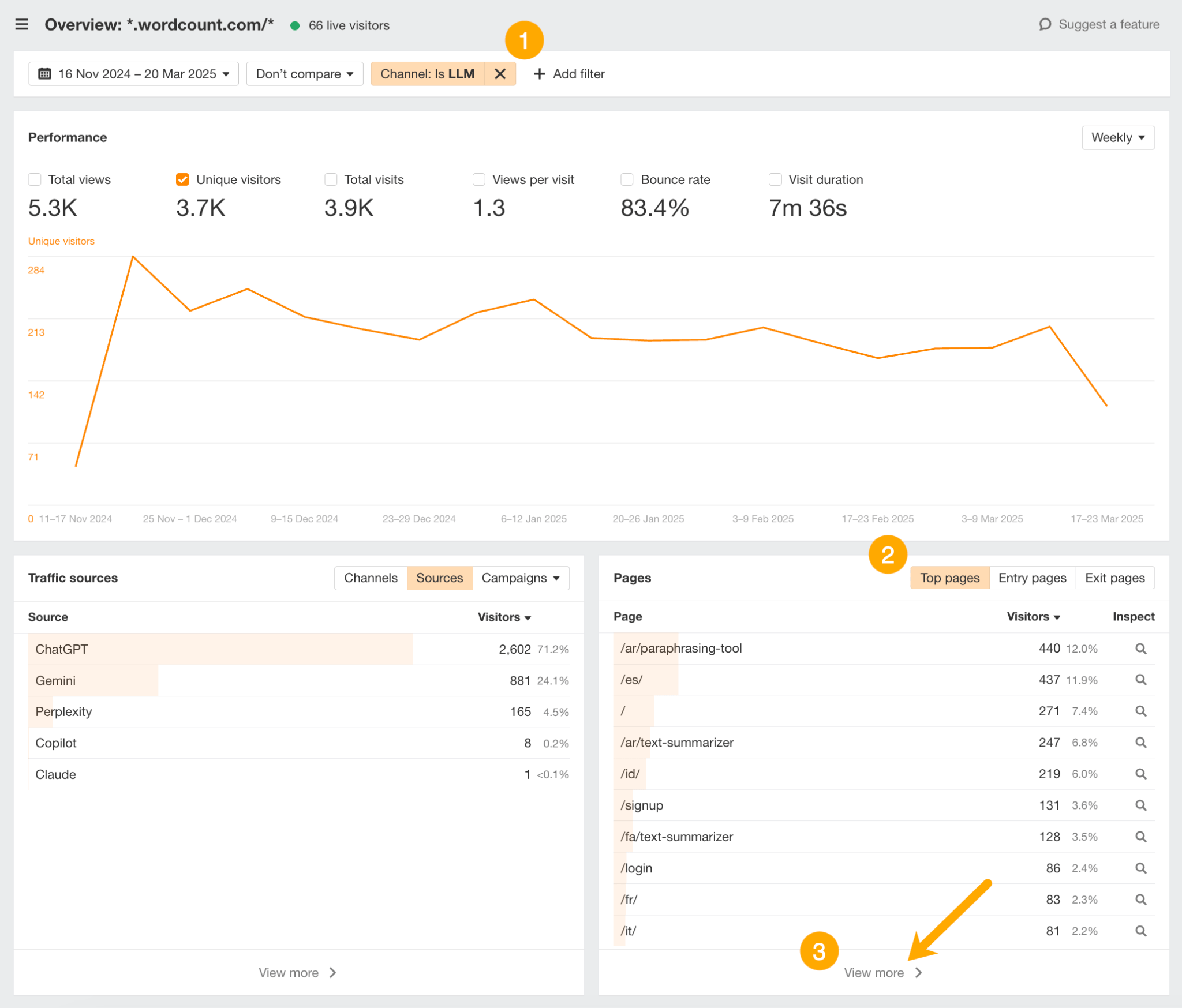
See your AI traffic vs. other channels. This shows AI as a share of total sessions alongside organic, direct, and referral—useful for deciding how much strategic weight to give the channel. You can also compare behavior metrics (bounce rate, session duration) directly against other channels here.
- Go to the Overview report
- Under “Traffic Sources,” select the Channels tab
- Click View More to open the full channel report
- Apply the LLM channel filter to isolate AI traffic
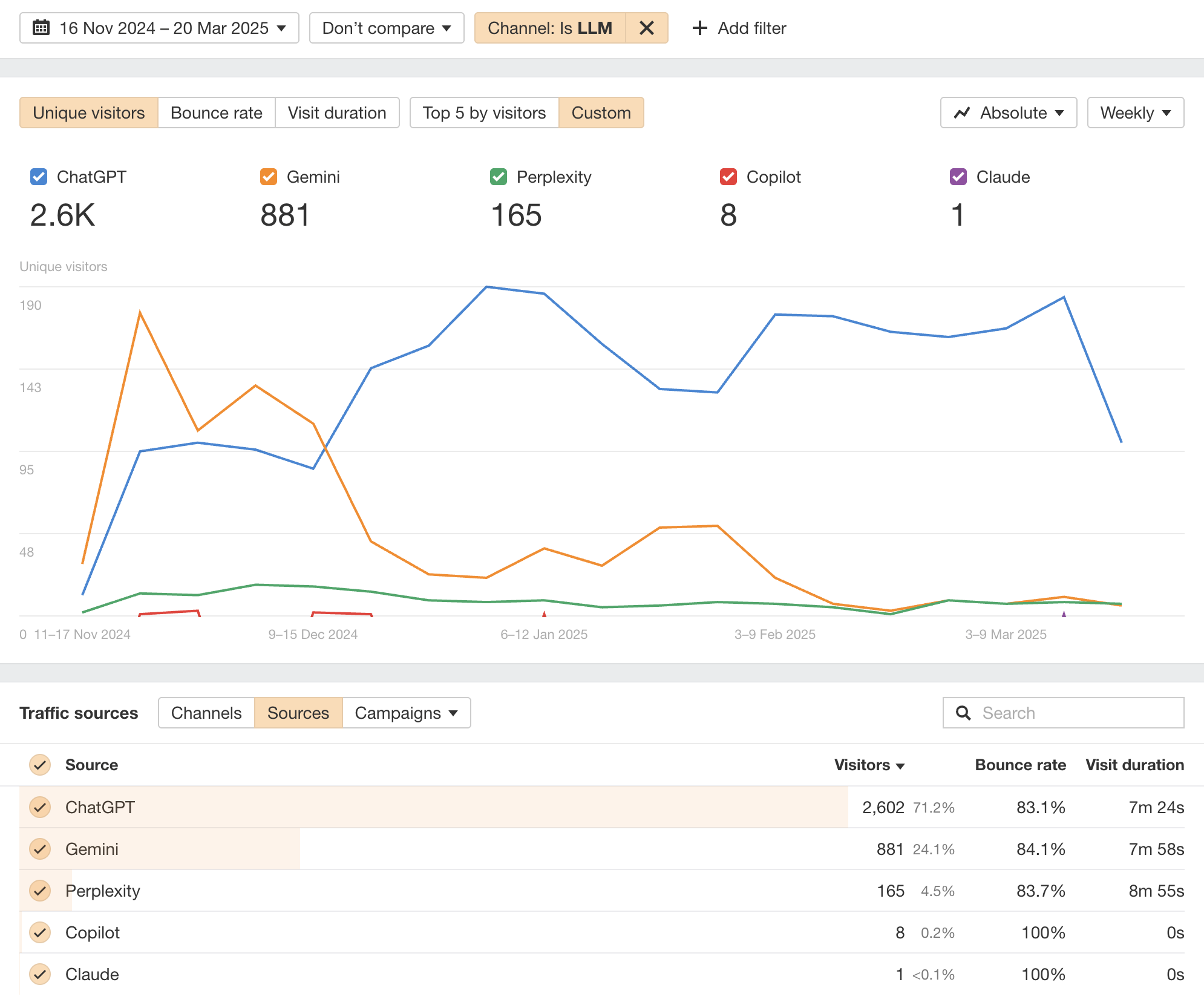
Find which AI platforms send you the most traffic. You’ll see a breakdown by platform (ChatGPT, Gemini, Perplexity, Copilot, Claude) with trend lines over time. Switch to Relative view to spot share shifts — useful for catching when one platform starts outpacing another.
- Keep the LLM filter active
- Under “Traffic Sources,” switch to the Sources tab
- Click View More
Find which content gets cited most. The Pages report shows your most-visited content from AI with bounce rate and time-on-page. Low bounce + high time on page signals content that AI visitors actually engage with after clicking — worth doubling down on.
- Keep the LLM filter active
- Under “Pages,” select Top Pages → View More
Ahrefs Bot Analytics
If you also want to monitor AI crawler activity—not human referrals, but the bots actually crawling your pages—Ahrefs Bot Analytics tracks which bots visit your site, how often, and which pages they crawl, broken down into 12 categories, including a dedicated AI bots filter.
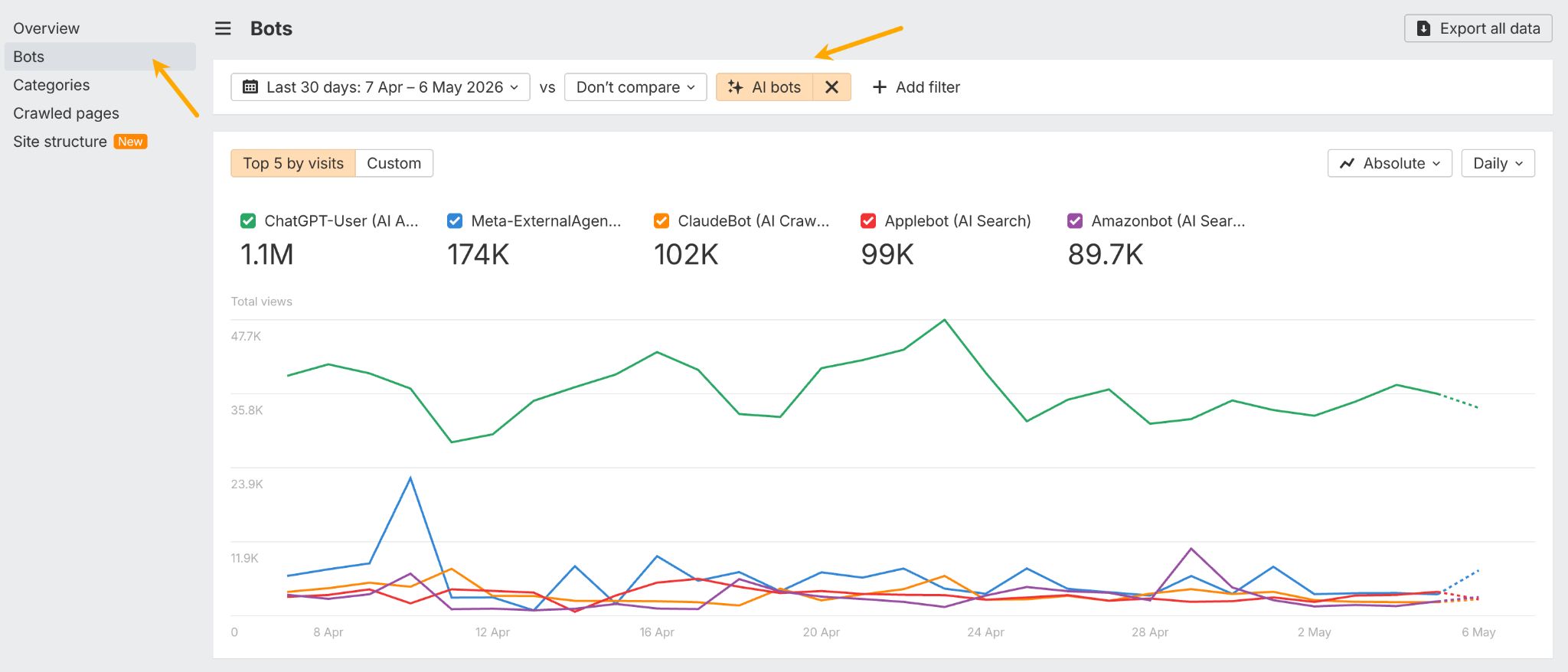
This matters because crawl access is a prerequisite for citation. If GPTBot or ClaudeBot isn’t crawling your content, those platforms can’t cite it—which means no referral traffic downstream. Bot Analytics shows you whether they’re getting in, how frequently, and which pages they’re hitting.
Bing Webmaster Tools
If Copilot is on your radar, Bing Webmaster Tools has a dedicated report for AI-generated response clicks. Under the Search Performance section, you can filter by “Generative” to isolate traffic that came from Copilot’s AI answers—broken down by page and by the prompt that triggered the response.
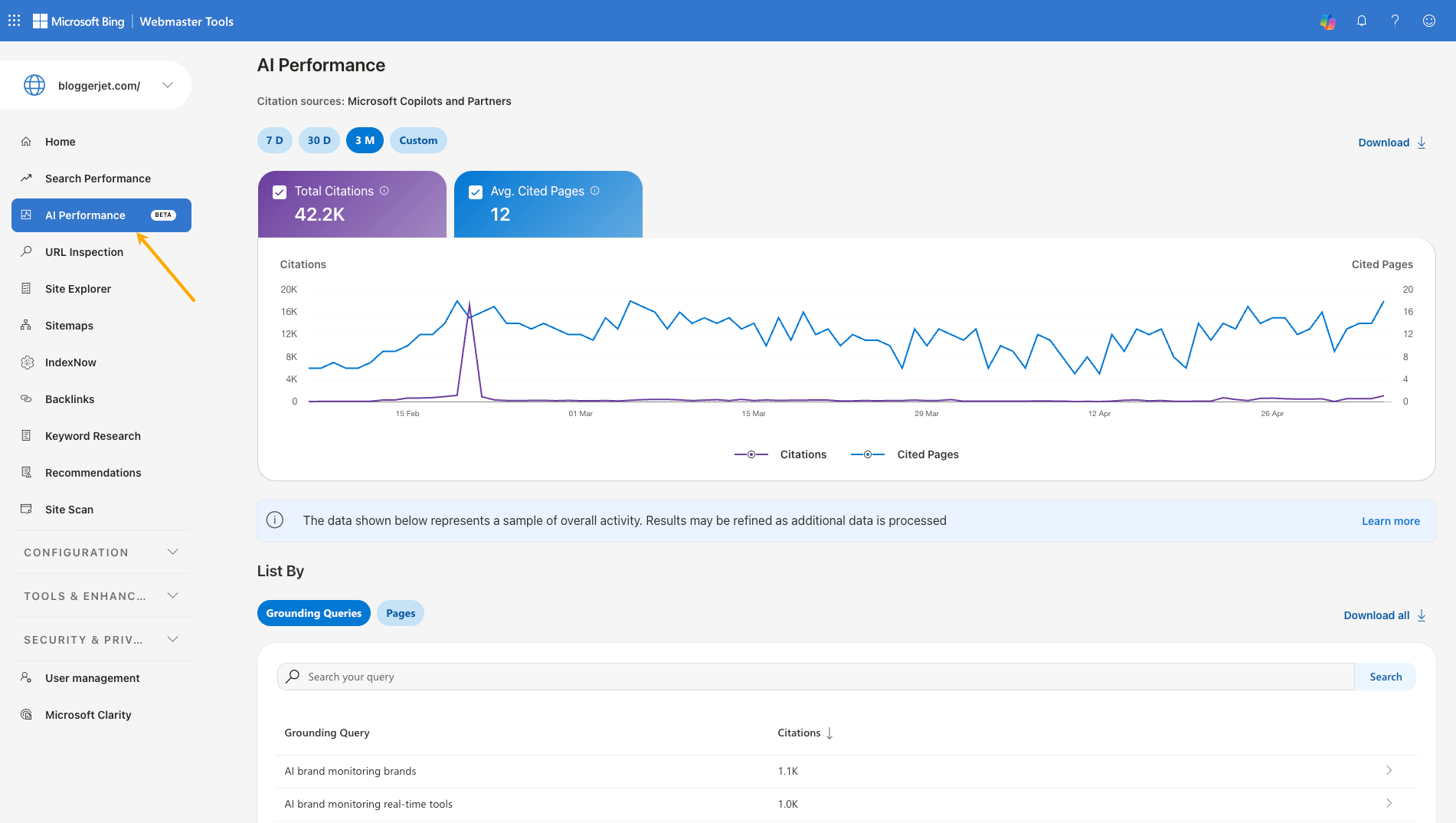
It’s one of the few places you can see the actual user queries that led to a click, which makes it useful for understanding what topics your content is being surfaced for—and what you’re missing.
Additionally, you can use this data as an AI visibility proxy for Google Search. There’s a high chance that people will find you in other AI systems through the same prompts as you see in Bing Webmaster Tools.
To get more meaningful online mentions, you should focus on:
- PR and media coverage. Arguably more valuable in the AI era than it was before. What authoritative outlets say about you gets ingested by AI systems and shapes the answers they generate, so coverage becomes part of the training and retrieval substrate. The stronger the consensus across publications, the more consistently you’ll show up in AI responses, because the model gets more confident about the narrative around your brand.
- Industry “best of” lists. They aren’t always the highest-quality content on the web, but AI systems still lean on them heavily for product recommendations because rankings and reviews look like the most directly relevant piece of information for a buying question. Last time we checked across all source links AI systems pull from, “best X” blog lists make up 43.8% of all page types. Getting onto the right roundups—the ones real publications maintain, not the SEO-bait ones—is one of the most direct paths to AI citations.
- Reddit and YouTube. Reddit and YouTube have a special place in AI’s pipeline — they sit on a dedicated retrieval lane (separate API feeds layered on top of regular search), pulled in at huge volume so the model can sense “what real people say.” They almost always show up in the top-cited domains because of that volume.
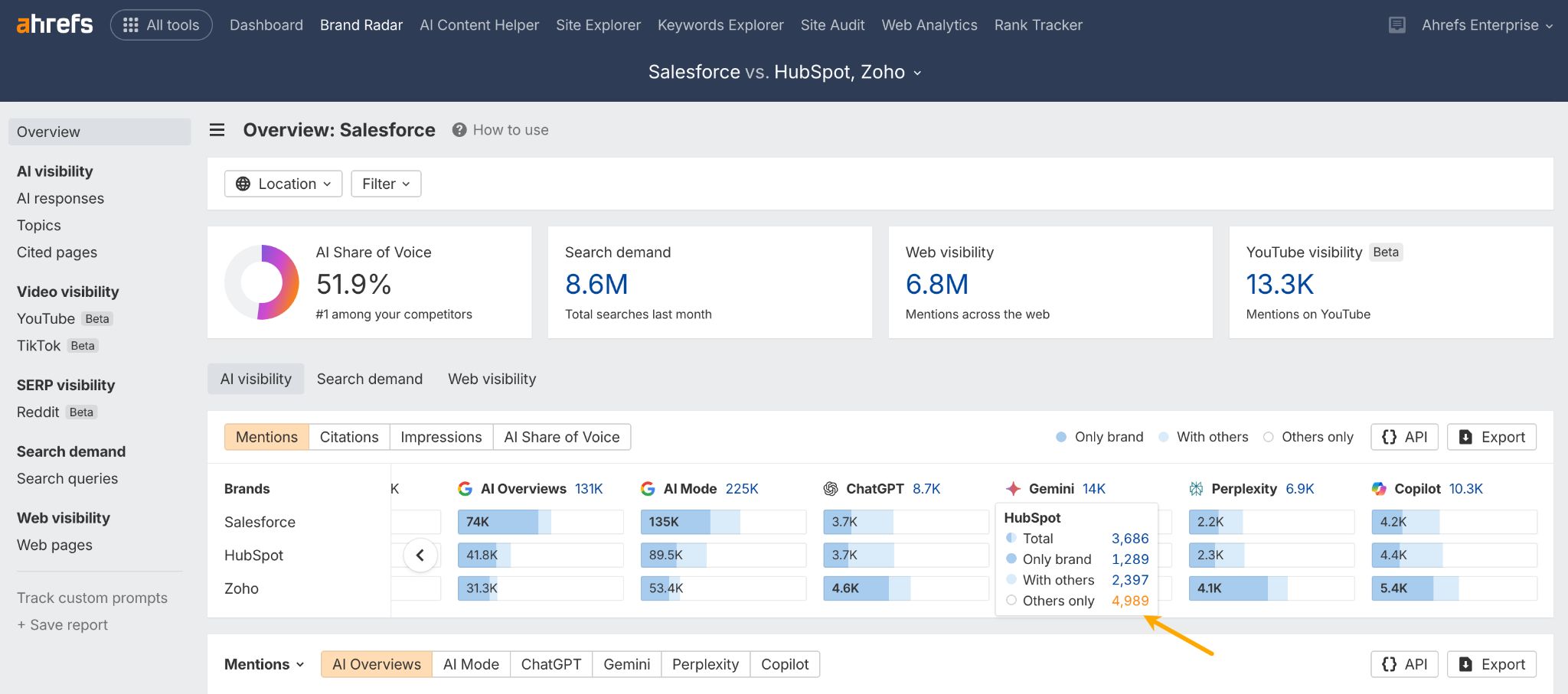
A straightforward way to start with this is to find your AI mention gaps using Ahrefs Brand Radar (AI answers that mention your competitor but not you).
- Enter your brand and add competitors (or use the AI suggest feature)
- In the Overview tab, compare mentions, impressions, and AI Share of Voice per platform
- Click into any platform, select Others only to filter to queries where competitors are mentioned but you aren’t
- Open Cited Domains to see which outlets are driving competitor mentions—those are the publications to target with PR
Build content AI wants to cite
Four things drive whether a page earns citations once crawlers can reach it: format, structure, topical coverage, and freshness.
Pick formats AI leans on. Across sites, “best” roundups (7.06% of AI traffic), how-to guides (6.35%), “top” lists (5.5%), “vs” comparisons (4.88%), and product/service pages (4.5–6.8%) consistently outperform.
The pattern across our own three months of AI traffic data agrees: how-to guides and original data studies pull the most views and the deepest engagement, while definitions and product pages do quieter but valuable work for navigational and bottom-funnel queries.
The takeaway isn’t to pick one format—it’s to cover several so you catch different user intents.
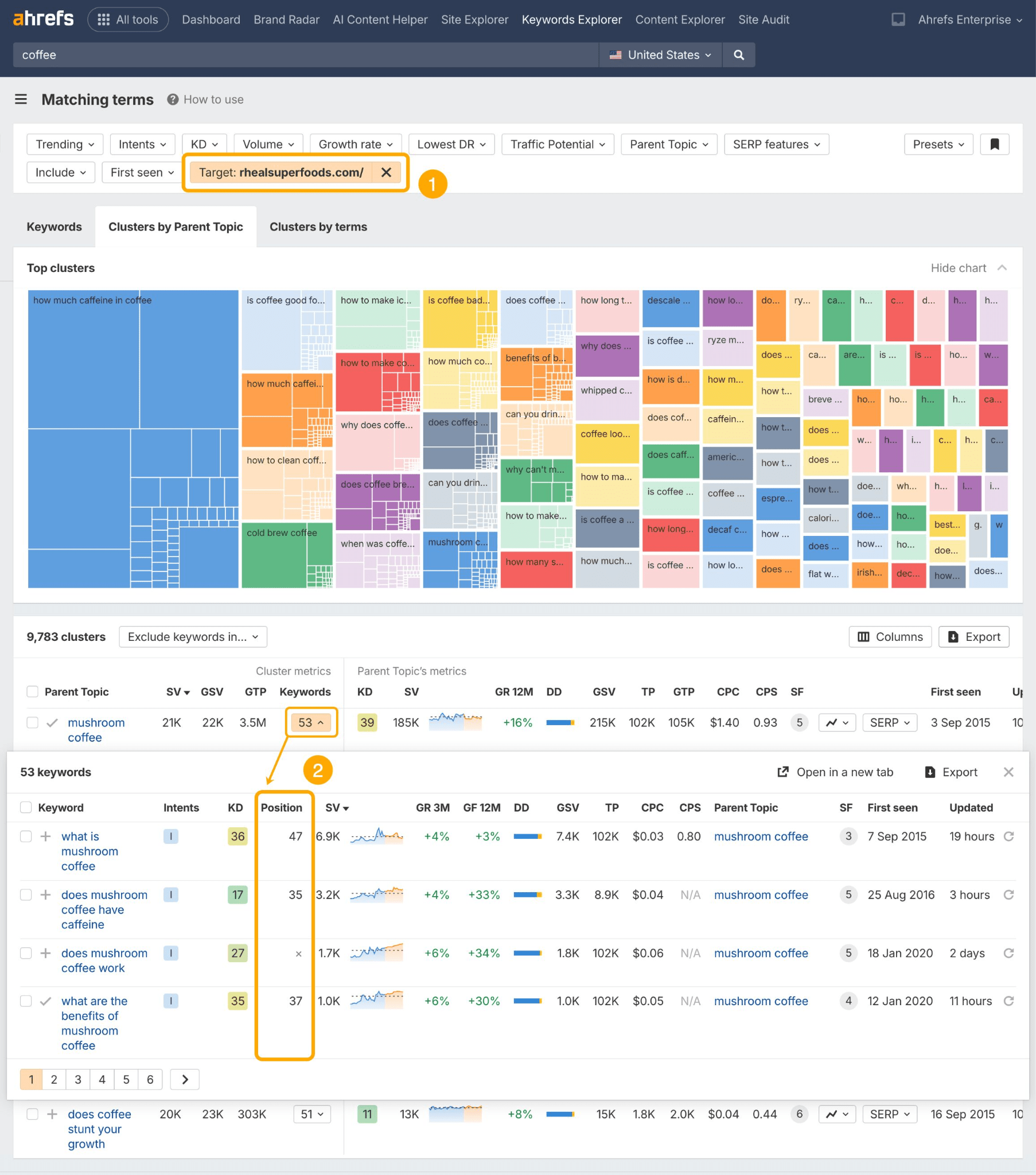
Cover the long tail. Studies of real ChatGPT conversations found the average prompt is 42 words long, and 75% are commands rather than questions (“how to create,” “best way to track”). Content clusters that cover every angle of a topic—not just the head term—match how people actually prompt AI.
Two ways to find the gaps in Ahrefs:
Keywords Explorer, enter your main topic, go to Matching Terms, group by Clusters by Parent Topic, open the Questions tab, and filter by your domain to see which angles you cover and which you don’t.
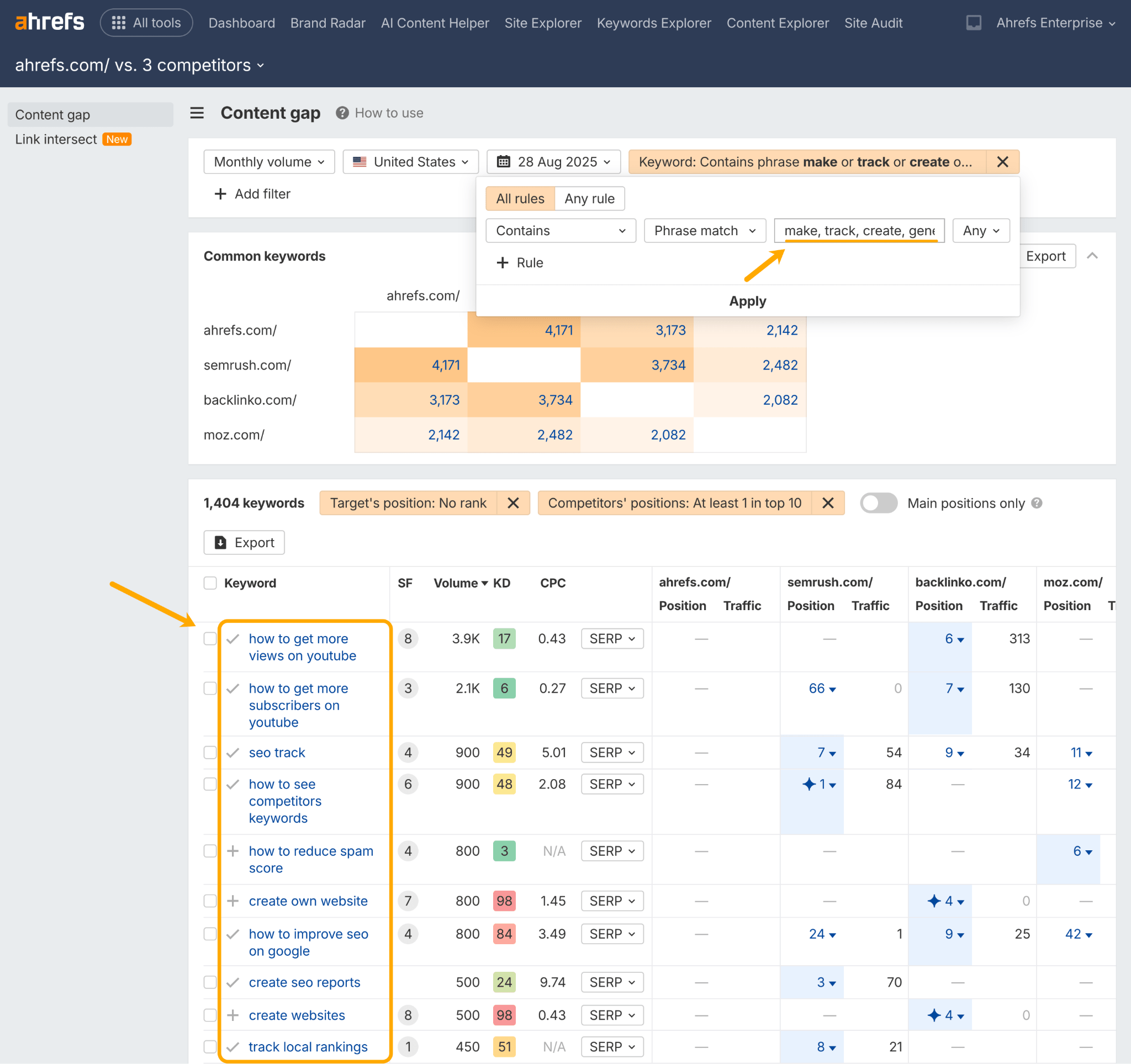
Command-based gaps: in Competitive Analysis, compare your domain against two or three competitors and filter for keywords containing “how to,” “create,” “track,” or “make.” Those are the task-completion queries competitors may already own.
Lead with the answer. AI systems only consider the first 30 passages of a page for embeddings, and passages get retrieved individually, so each section needs to make sense on its own. Don’t bury the main point. Answer first, then expand.
Keep content fresh. AI assistants cite content that is 25.7% fresher than what appears in organic search, with a 13.1% preference for recently updated pages. HubSpot updated one post on small business ideas and earned 1,135 new AI Overview mentions from that single refresh. Regular updates aren’t just SEO hygiene—they’re a direct citation signal.
It connects directly to the same data sources mentioned throughout this article, including Keywords Explorer, Brand Radar, Web Analytics, and Bot Analytics. From a single prompt, it can run multi-step workflows that would normally take a full research session.
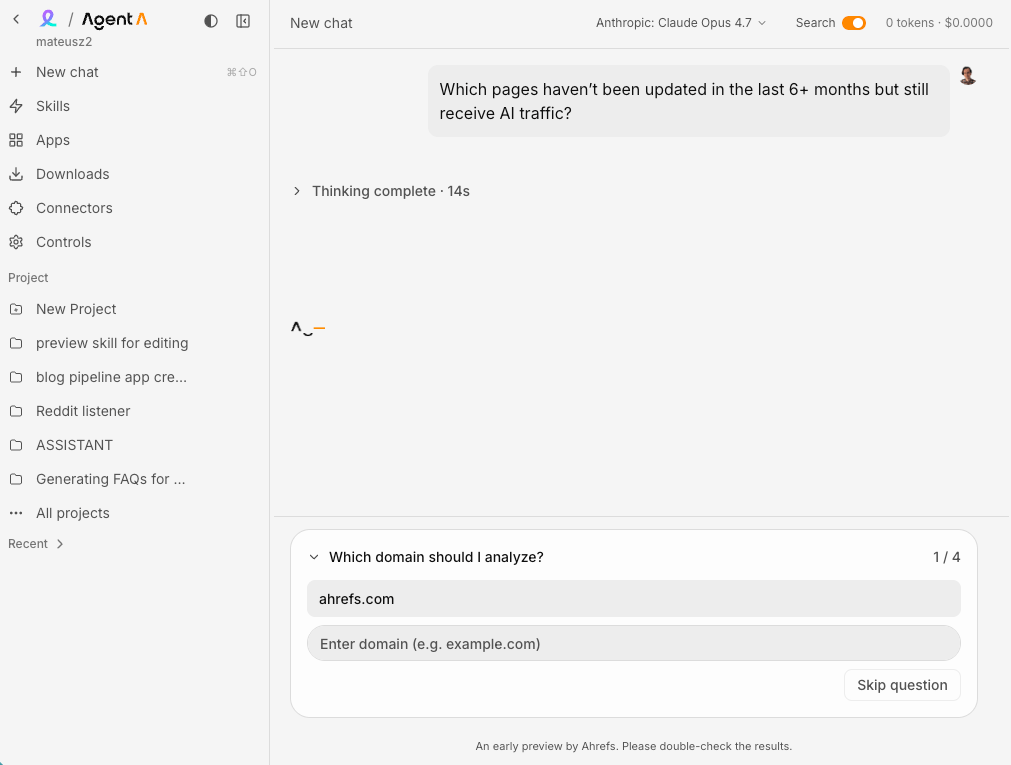
Here are a few prompts that work especially well for an AI citation strategy:
“Compare our ‘how-to’ content against [competitor] and [competitor]. Show the highest-volume keyword gaps.”
“Find every page on our site ranking for AI-cited queries with a bounce rate above 70%. Those are good candidates for an answer-first rewrite.”
“Which pages haven’t been updated in the last 6+ months but still receive AI traffic?”
“Using Brand Radar, show domains where competitors are being cited but we aren’t, ranked by frequency. Those are potential PR opportunities.”
Final thoughts
Most “AI SEO” advice right now is people pattern-matching on a channel that barely exists yet. 0.28% of total web traffic is not a strategic priority for most businesses. But it’s a strategic priority for the ones who notice the conversion math: a channel converting, in some cases, 23x better than organic search, is worth ten times the effort its raw volume suggests.
Don’t rebuild your content strategy around it yet. Do set up tracking, ship the formats AI leans on, and check your analytics. That’s enough to be ready when the volume arrives.
Further reading
Thanks for reading! Feel free to reach out on LinkedIn.
Similar Posts
The Free Tools SEO Strategy: How to Rank With Calculators, Converters, and Generators
Some of the highest-traffic pages on the internet aren’t articles. They’re tools. A grade calculator. A…
How to Set Min & Max WooCommerce Order Limits (& Stop Overselling)
It’s frustrating when customers place orders in your online store that are too small to be…
How to Measure AI Search Visibility When Attribution Falls Short
More than one in five people who sign up for Ahrefs say they found us through…
Leveraging SR-IOV, DPDK for High-Performance Virtualized Interfaces
Building a virtualized network environment that matches the speed and reliability of bare metal is a…
96.98% of Clicks Happen in the Top 10 Search Results
How many clicks and impressions come from rankings beyond Google’s first page? To find out, we analysed…
Fewer Returns, More Sales: How to Add Size Charts in WooCommerce
Have you ever wondered how many sales you lose because shoppers aren’t sure if an item…