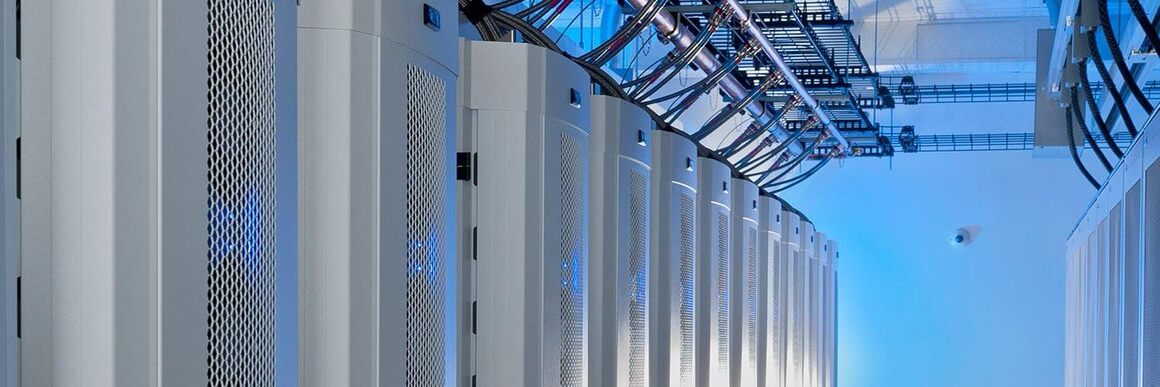
Sabey Data Centers has entered into a strategic partnership with OptiCool Technologies to accelerate the deployment of advanced cooling solutions designed for high-density and AI-driven workloads. The collaboration brings OptiCool’s two-phase refrigerant pumped cooling systems into Sabey’s integrated cooling technologies partnership program, with the goal of simplifying adoption of liquid cooling across Sabey’s multi-tenant data center portfolio.
The partnership reflects mounting pressure on data center operators to address escalating rack densities driven by artificial intelligence, high-performance computing, and next-generation enterprise workloads. As compute power increases, traditional air-based cooling and even some liquid cooling approaches are proving difficult to scale without major facility redesigns. Sabey’s agreement with OptiCool is positioned as a response to these challenges, offering customers a more streamlined pathway to higher-density operations.
OptiCool’s technology uses a non-conductive refrigerant that absorbs heat through phase change, enabling efficient rack-level heat removal without relying on chilled water systems or large mechanical infrastructure. By eliminating the need for extensive retrofits, the approach is intended to reduce deployment timelines and lower overall energy consumption while supporting significantly higher compute densities. For operators, this can translate into improved power usage effectiveness and more flexible facility design as AI workloads evolve.
Sabey executives say the partnership is part of a broader strategy to remove barriers to liquid cooling adoption as customer requirements become more demanding. John Sasser, chief technical officer at Sabey Data Centers, noted that cooling has become one of the most critical constraints facing customers deploying high-density compute. He said integrating OptiCool’s systems into Sabey’s facilities allows customers to adopt advanced cooling architectures while maintaining operational reliability and clarity.
From OptiCool’s perspective, aligning with a data center operator that designs and builds facilities with next-generation compute in mind creates an opportunity to scale its two-phase refrigerant technology more rapidly. Lawrence Lee, chief channel officer at OptiCool, said data center operators are under increasing pressure to balance density growth with energy efficiency and sustainability objectives. He added that working with Sabey allows OptiCool to deliver its cooling systems in environments purpose-built for advanced workloads.
Under Sabey’s integrated technologies partner program, the two companies will collaborate on deployments that align cooling technology, facility design, and operational responsibility. The model is intended to give customers greater confidence as they transition to higher-density architectures, reducing uncertainty around performance, integration, and long-term sustainability.
For enterprise and hyperscale customers, the partnership underscores a broader shift in the data center industry toward alternative cooling technologies that can keep pace with AI-driven demand. As liquid cooling moves from niche deployments to mainstream adoption, collaborations between facility operators and specialized cooling providers are increasingly seen as essential to delivering scalable, energy-efficient infrastructure.
Executive Insights FAQ
Why did Sabey partner with OptiCool?
To simplify and accelerate adoption of advanced cooling for high-density and AI-driven workloads.
What differentiates OptiCool’s cooling technology?
It uses two-phase refrigerant cooling that removes heat efficiently without chilled water or major facility retrofits.
How does this benefit data center customers?
Customers can increase rack density while reducing energy use and avoiding complex infrastructure changes.
Is this partnership limited to specific facilities?
The collaboration is designed to support deployments across Sabey’s national multi-tenant data center portfolio.
What does this signal for the data center industry?
It highlights growing momentum toward liquid and alternative cooling solutions as AI workloads reshape infrastructure requirements.
![Live Tech Support! [Cold Wallets, Security, AMA]](https://vmcloud.com.au/wp-content/uploads/2025/08/live-tech-support-cold-wallets-security-ama.jpg)