Even with strong hardware and high bandwidth, many systems still experience inconsistent performance or unexpected security exposure. The issue often lies in how infrastructure is shared. When workloads compete within the same environment, interference becomes unavoidable.
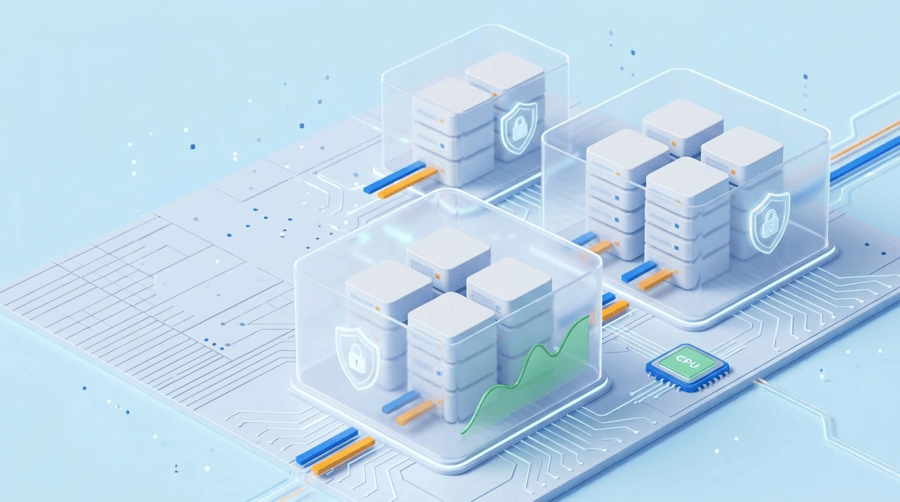
Dedicated server network isolation changes this by separating workloads, traffic, and access layers into controlled environments. This separation allows systems to maintain consistent performance while strengthening security.
What Is Dedicated Server Network Isolation
A network isolation dedicated server ensures that all resources, including compute and network paths, are exclusively assigned to one user. There is no overlap with other tenants, which removes the unpredictability seen in shared setups.
This isolation can exist across physical hardware, private networking, and IP allocation, forming a fully isolated server environment.
Tip: Always confirm whether isolation includes both hardware and network layers, not just virtual separation.
Why Shared Infrastructure Causes Instability
In shared environments, performance depends on other users. Even if your workload is optimized, external activity can create congestion and slowdowns.
This leads to fluctuating latency, inconsistent response times, and performance drops during peak usage.
Note: Bandwidth capacity alone does not guarantee stability. Consistency comes from uncontended resources.
How Isolation Strengthens Dedicated Server Security
Dedicated server security improves because isolation removes cross-tenant risks. There are no neighboring workloads that could introduce vulnerabilities or indirect exposure.
It also allows full control over security configurations such as firewall rules, access control, and monitoring systems tailored to your needs.
This is especially important for businesses handling sensitive or regulated data.
Tip: Look for providers that support custom firewall deployment and private network segmentation for stronger protection.
How Network Isolation Improves Stability
Dedicated server stability comes from predictable resource usage. Since no other workloads compete for resources, applications perform consistently even under high demand.
This results in stable response times, reduced latency fluctuations, and fewer disruptions.
Note: Stability includes both uptime and consistent performance, not just whether the server stays online.
The Role of Private Networking in Isolation
Private networking enhances server network isolation advantages by keeping internal traffic off the public internet.
This improves speed and reduces exposure to external threats. It also allows better control over how data flows between systems.
For multi-layer applications, this creates smoother communication between components.
Tip: Choose infrastructure that supports private networking or VLANs for internal traffic separation.
Dedicated IP and Network-Level Isolation
A dedicated IP ensures that your server operates independently at the network edge. It prevents issues caused by shared IP usage, such as blacklisting or bandwidth contention.
This improves reliability for services like email delivery, APIs, and secure connections.
Note: Dedicated IPs are essential for businesses that rely on consistent reputation and connectivity.
Operational Simplicity and Troubleshooting
Isolation simplifies infrastructure management. When issues arise, they can be identified and resolved within a single environment.
This reduces downtime and improves monitoring accuracy.
Problems remain contained instead of affecting multiple systems.
Tip: Monitoring tools and performance visibility are valuable when managing isolated environments.
Scalability Without Performance Trade-Offs
Isolation supports structured scaling. Instead of overloading shared resources, organizations can expand by adding dedicated environments or separating workloads.
This maintains consistent performance as demand grows.
Note: Controlled scaling is often more reliable than shared scaling models for critical applications.
Why Network Location Still Matters
Even with isolation, server location still affects performance. Infrastructure placed near major internet exchange hubs benefits from lower latency, stronger routing efficiency, and more stable connectivity.
For Asia Pacific deployments, connectivity hubs such as Hong Kong play a key role in linking regional and international networks. At the same time, global coverage also matters for organizations serving multiple markets.
Dataplugs operates dedicated server infrastructure in several major connectivity locations including Hong Kong, Tokyo, and Los Angeles. These data center locations allow businesses to deploy workloads closer to their users across Asia and North America.
In addition, Dataplugs provides CN2 direct China connectivity, which helps optimize routes between international infrastructure and mainland China networks. This can significantly improve latency and stability for applications targeting Chinese users.
Tip: When choosing a dedicated server provider, evaluate data center locations, carrier diversity, and specialized routing options such as CN2 if your users are located in China.
Frequently Asked Questions
What is the main advantage of dedicated server network isolation?
It removes resource contention and external interference, resulting in stronger security and more consistent performance.
Is network isolation necessary for small or medium businesses?
It depends on workload sensitivity. Businesses handling customer data, transactions, or high traffic often benefit significantly from isolated environments.
Does a dedicated server guarantee better performance than shared hosting?
In most cases yes, because resources are not shared. Performance remains stable regardless of other users’ activity.
Conclusion
Dedicated hosting security benefits and performance improvements come directly from isolation. By removing shared risks and controlling resource usage, organizations gain predictable and stable infrastructure.
As applications become more demanding, isolated environments provide a stronger foundation for long-term reliability.
If you are evaluating dedicated server solutions or planning an isolated deployment, you can connect with the Dataplugs team via live chat or at sales@dataplugs.com to learn more about available options.