Everyone’s talking about “AI agents” now. But what’s the real difference between generative AI and agentic AI? And which is the best tool for saving you precious time across all your marketing workflows?
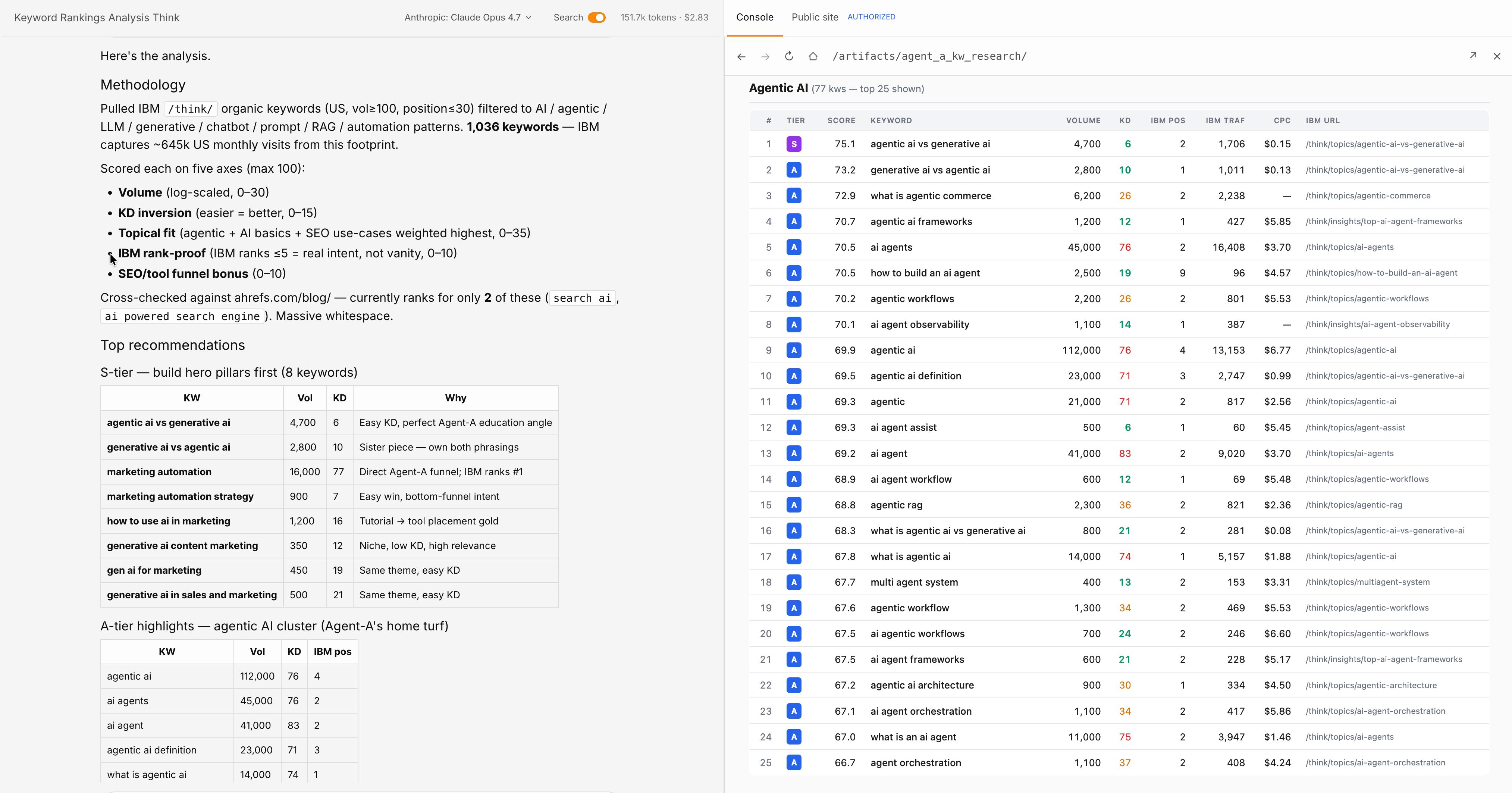
A marketer opens ChatGPT, types a prompt, and gets a (probably pretty bad) blog post draft back in 30 seconds. That’s generative AI. Their colleague opens Agent-A, gives it a target keyword, and walks away. Twenty minutes later, they have a full SEO research report, without touching the keyboard again: keyword data pulled, SERPs analyzed, content gaps identified, recommendations written. That’s agentic AI.
In both cases, you’re using the same underlying technology, but the results (and effort required to reach them) are very different.
Generative AI creates content on demand, but agentic AI takes action autonomously. And if you’re a marketer deciding which tools to adopt, which workflows to automate, or how much human oversight to keep, you need to understand the difference.
Try Agent A: the new marketing agent from Ahrefs
We’ve just released Agent A, an AI agent with unrestricted access to Ahrefs data that can actually do marketing for you.
Run keyword research, analyze your competitors, optimize your content, make technical SEO fixes, and much more—all automatically, using state-of-the-art agentic AI models and Ahrefs’ world-class data.
Learn more about Agent A.
In this article, I’ll explain the difference between generative and agentic AI, show you what each looks like in practice, and help you figure out where each one fits in your day-to-day work.
Image generation has become a staple for social, design and advertising teams. Nano Banana (aka Gemini’s image models), GPT Image 2, and Adobe Firefly are powerful go-tos for ad creatives, social images, and concept visuals. (And personally I still have a soft spot for the aesthetic style of Midjourney).
Video generation is the fastest-moving frontier. Tools like Sora, Runway, and HeyGen produce product demos, social video, and spokesperson clips from a text prompt or a reference image. HeyGen in particular has seen rapid adoption for creating localized videos without a huge international marketing crew.
All of these tools have an important trait in common: every output requires a human to decide what happens next. The model completes its task and waits. Even “assistants” with persistent memory—like a custom GPT with context about your brand, like the ones we built for our first AI content system—don’t close the loop on tasks autonomously. They’re still reactive at their core.
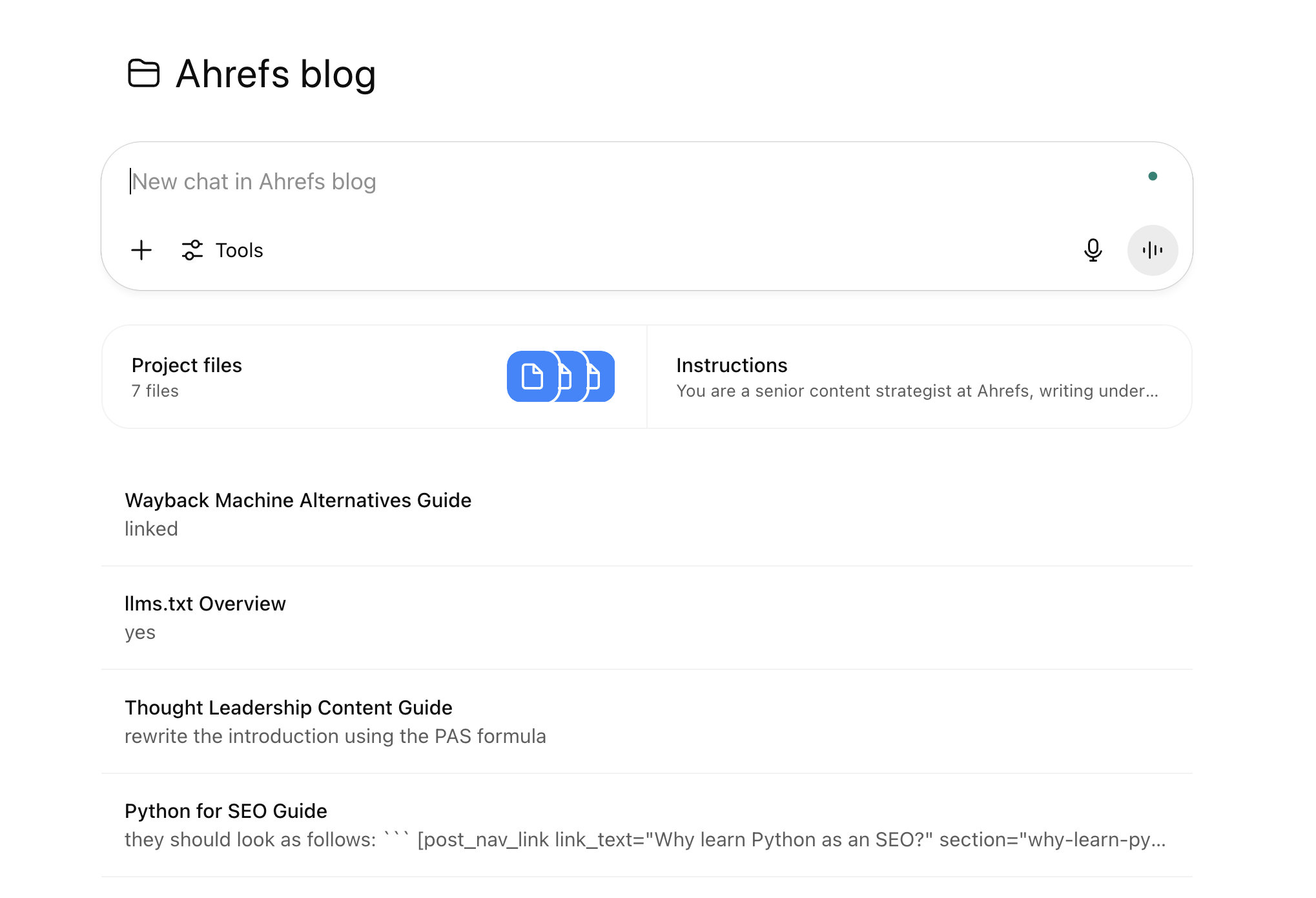
The custom GPTs we built for our AI content workflow. It worked well, but it was still extremely manual.
Agentic AI is moving fast, and the tools are more capable than most marketers realize.
Coding agents are the most mature example. Lovable turns a product description into a deployable web app with minimal back-and-forth—you describe what you want to build, and it writes, tests, and iterates until it works. Cursor brings the same agentic loop to an IDE (a code editor). Claude Code from Anthropic goes further: it reads an existing codebase, identifies what needs fixing, writes the changes, runs the tests, and iterates on failures without being asked at each step. Complex tools and workflows can be built autonomously, without tons of back-and-forth.
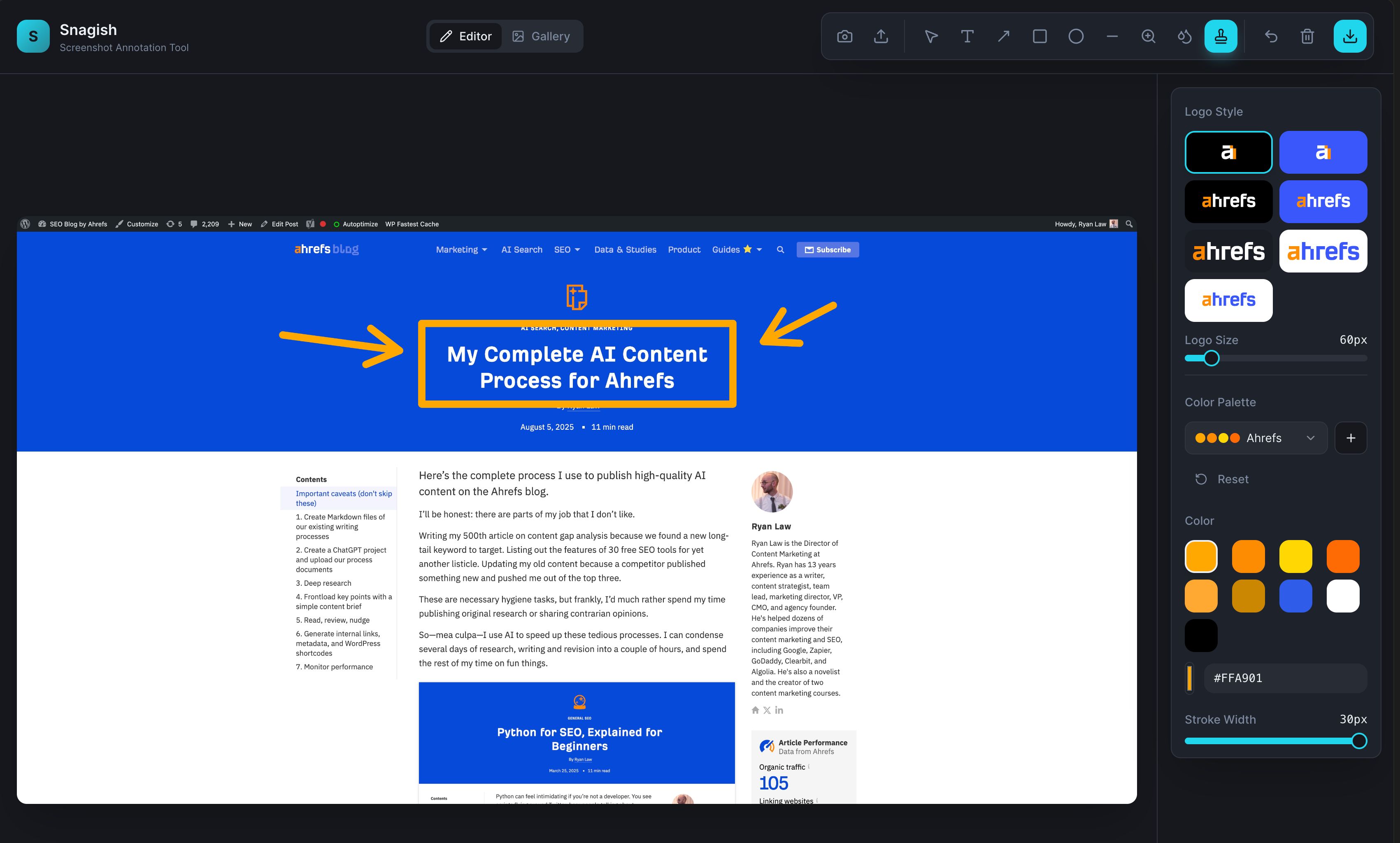
I built this screenshot tool for creating Ahrefs blog post images in Loveable.
Marketing agents are the version most relevant to marketers. Ahrefs’ Agent A is a purpose-built SEO and content assistant that handles research and content workflows autonomously—pulling data from Ahrefs, analyzing it, and acting on it without requiring you to manually run each report. If you’ve ever spent an afternoon pulling keyword data, cross-referencing competitor pages, and organizing it into a brief, Agent A is built for exactly that job.
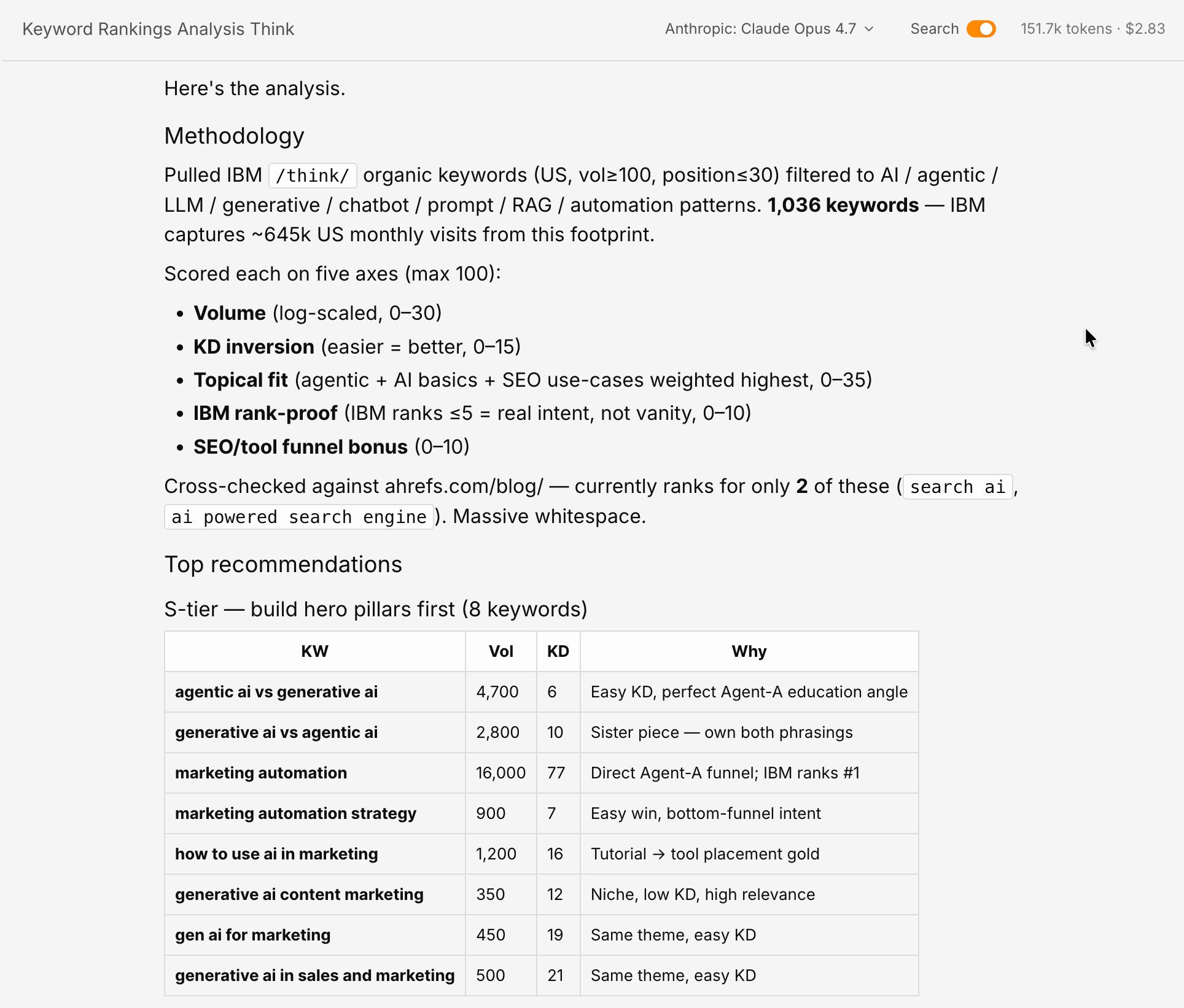
The actual Agent A chat that surfaced the keyword this blog post is targeting (meta!).
Multi-agent frameworks like AutoGPT and LangGraph chain specialized agents together to handle complex, multi-stage pipelines. You don’t need to know the technical details, but it’s worth understanding the concept: instead of one AI doing everything, these frameworks assign different parts of a task to different specialists. One agent handles research, another writes the copy, a third checks it for errors. The same division-of-labor logic that makes human teams effective applies to AI teams too.
These tools all work in the same fundamental way: you set a goal, the agent handles the execution, and you review the output rather than managing every step.
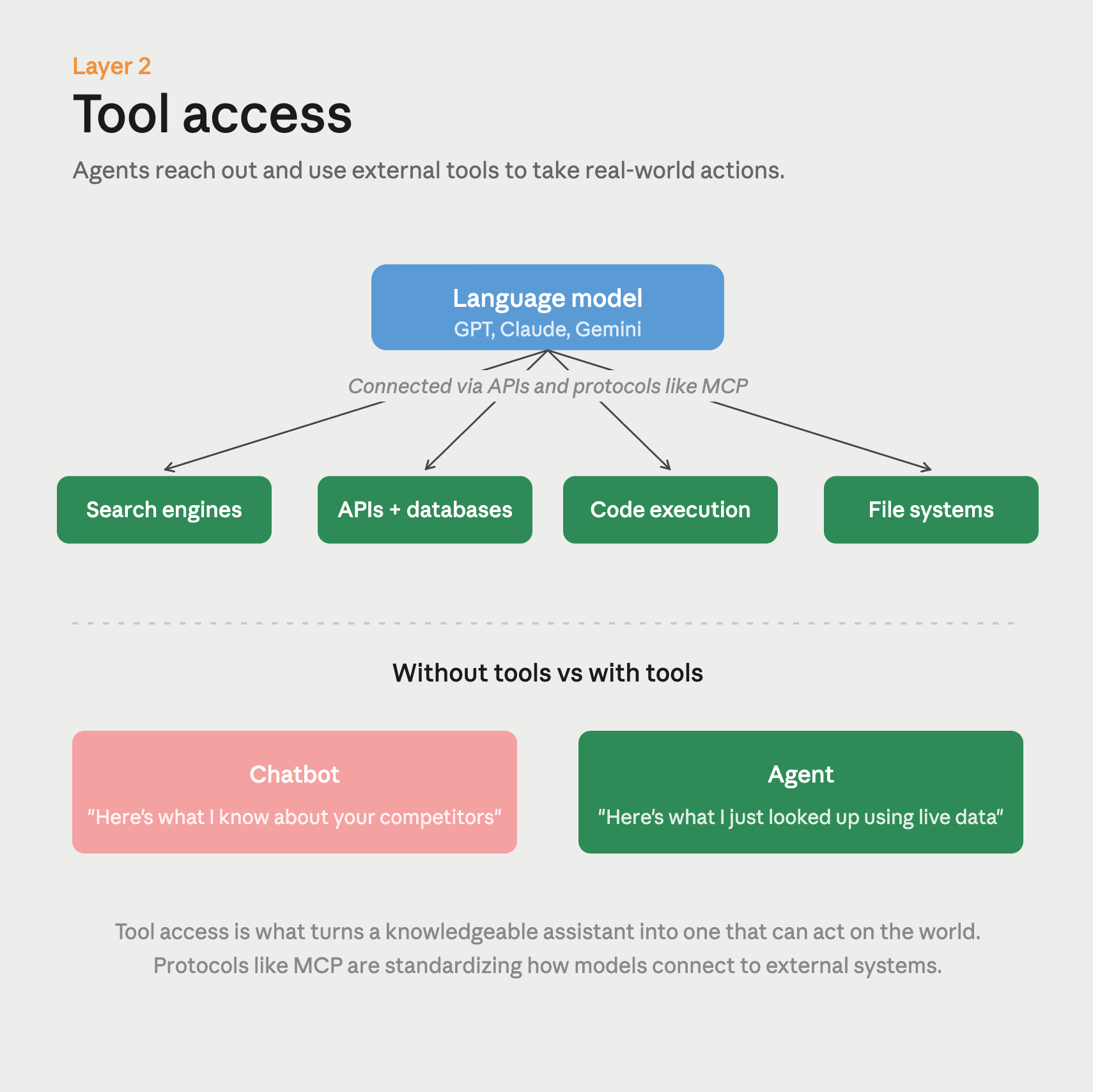
This is how an agentic system goes from “here’s what I know about your competitors” to “here’s what I just looked up about your competitors using live data.” Protocols like Anthropic’s Model Context Protocol (MCP) are standardizing how models connect to external tools, which is making it much easier to give agents access to the systems they need. (You can use Ahrefs’ official MCP in Claude and ChatGPT—learn more here.)
Further reading
3. Memory
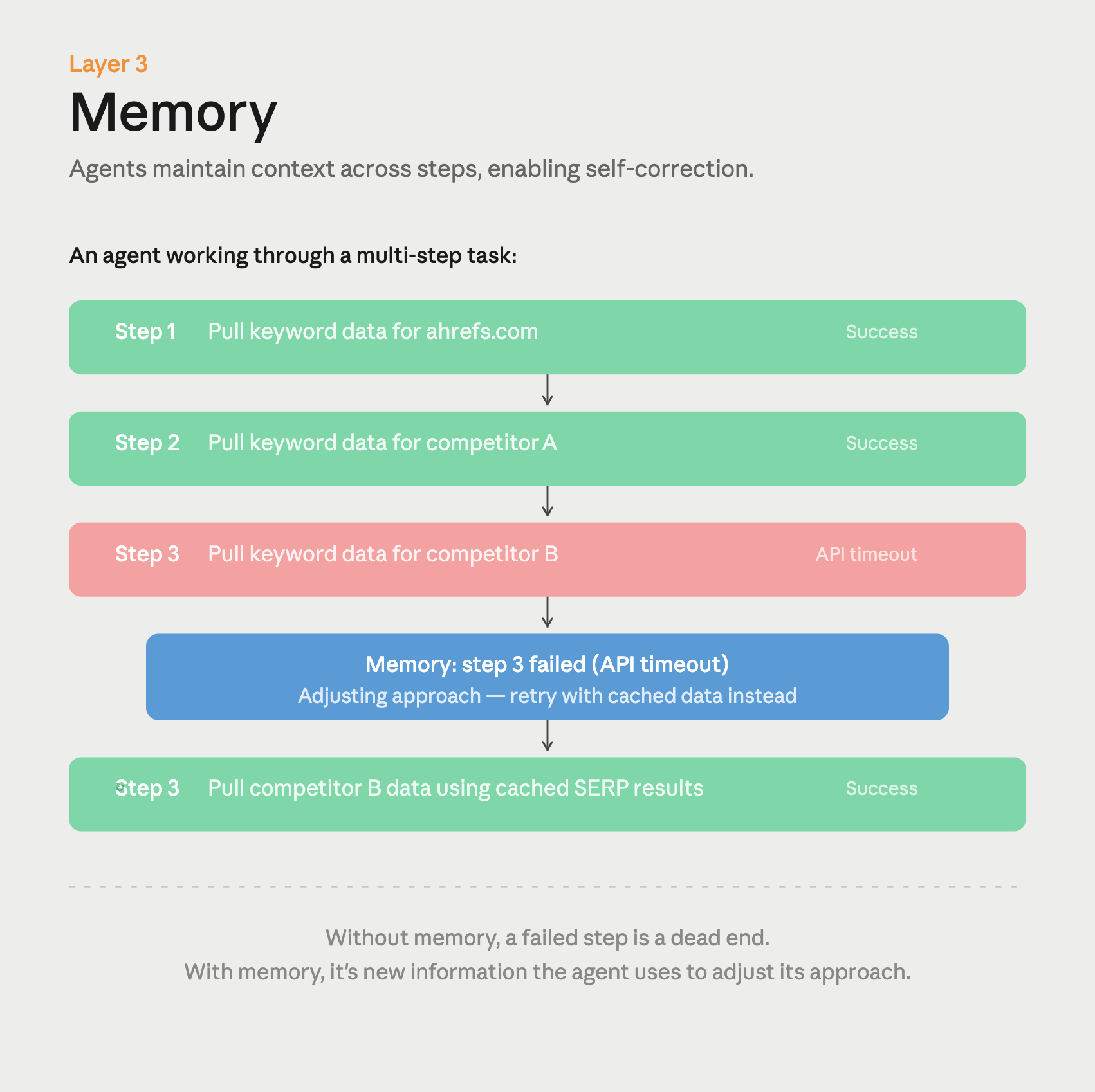
In a standard ChatGPT conversation, the model has no memory of what happened in previous sessions (unless you’ve turned on the memory feature, which is limited). An agentic system maintains context across the entire task, and sometimes across tasks.
It knows that step three failed, so it needs to adjust step four. It remembers that you prefer a certain format, or that a particular data source was unreliable last time. Without this persistence, an agent can’t self-correct or learn from its own mistakes mid-task.
4. An action loop
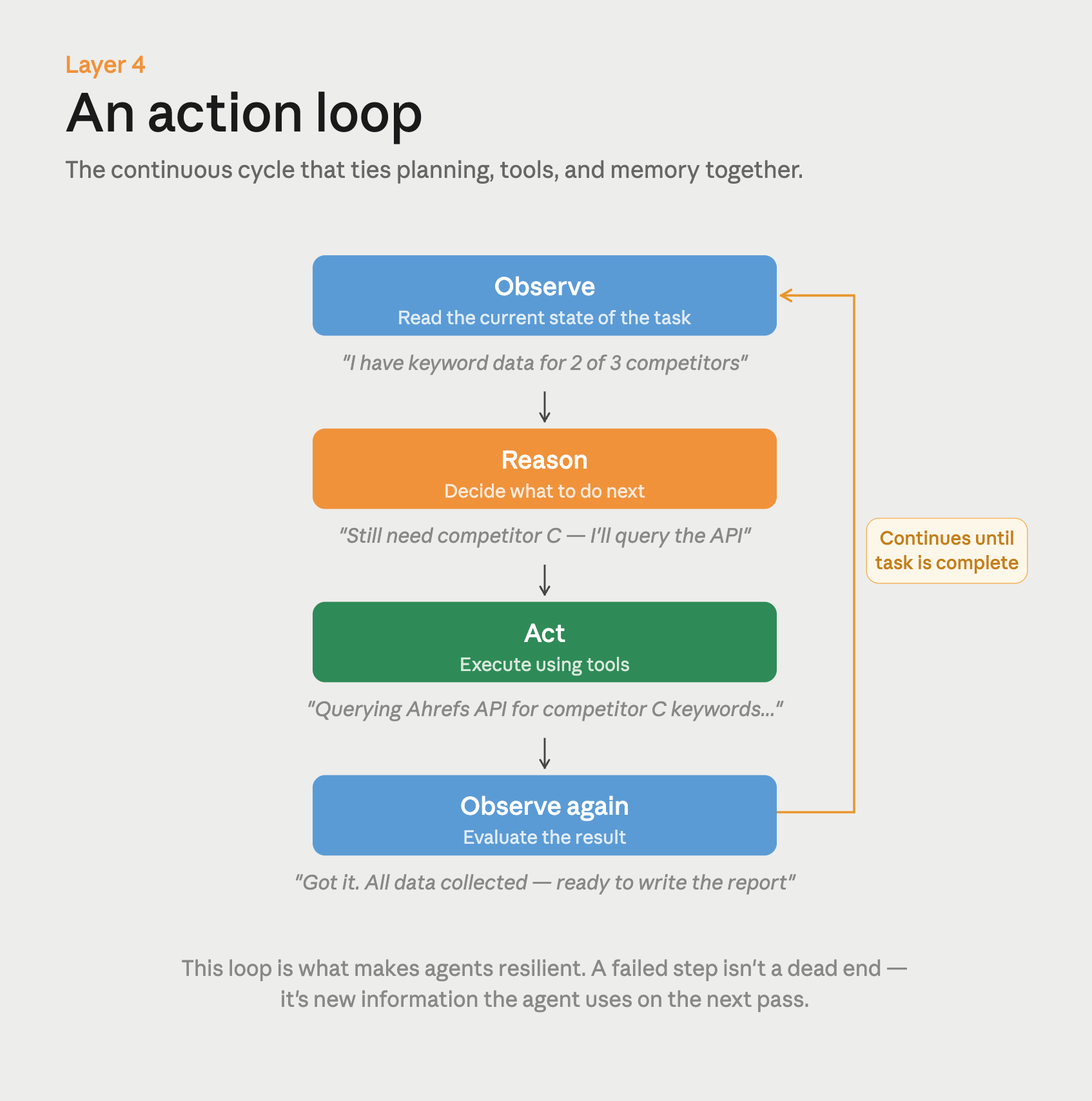
This is what ties everything together. Instead of generating one response and stopping, an agentic system runs a continuous cycle: observe the current state, reason about what to do next, take an action, then observe the result. If the result isn’t right, the loop continues. This is why an agent can recover from errors that would completely stall a generative AI tool—it treats a failed step as new information, not a dead end.
When you evaluate an “agentic” tool, you’re really evaluating the quality of the scaffolding: how well it plans, which tools it can access, how much context it retains, and how gracefully it handles failures. The underlying language model matters, but it’s only one piece of the system. Two agents built on the same model can perform very differently depending on how well this “orchestration layer” is designed.
Skill required
Getting good results from generative AI is mostly a writing skill. You learn to give clear prompts, iterate on the output, and spot when something isn’t quite right. Directing agentic AI is more like managing a team member. You need to set a clear goal, define what success looks like, and decide how much autonomy to give before you want to review the work. If you’re good at writing briefs and delegating, you’ll pick up agentic tools quickly.
These workflows require more complex LLM models and often cost more in token usage, but crucially, they’re still incredibly cheap when I consider the time they save me to spend on other, more crucial tasks.
That said, most marketing teams haven’t yet operationalized agentic tools beyond one-off experiments. The gap between what’s possible and what’s actually getting used day-to-day is significant. And most importantly, human oversight stays essential regardless of which type you’re using—agentic AI amplifies your decisions, including wrong ones. Keeping a human in the loop on consequential tasks is essential.
Final thoughts
If you want to see what agentic AI actually feels like in practice, Agent A is a good place to start. It’s built on 14 years of Ahrefs’ web index—170+ trillion pages, 41.9 billion keywords, 3.5 trillion backlinks—and it uses that data to run SEO and marketing workflows autonomously.
Give it a goal like “find content gaps against my top competitors” or “audit my site’s technical health,” and it handles the research, analysis, and reporting without you managing every step. It connects to your existing stack (including Google Analytics, Search Console, your CMS) so the recommendations are grounded in your actual data, not generic advice.
Further reading
Similar Posts
Google Web Guide: What It Is, How It Works, and What It Means for SEO
Just as we were wrapping our heads around AI Overviews, Google unveiled another new search experience:…
EAT: VMware Cloud Director Environment Assessment Tool
As we anticipate the next phase of our multi-tenant cloud platform, understanding the use of VMware…
What Is llms.txt, and Should You Care About It?
Developers and marketers are being told to add llms.txt files to their sites to help large…
What Are the Best Automation Opportunities in Dedicated Server Operations?
When dedicated server environments begin to expand, the real pressure usually comes from the operational workload…
What’s Coming in WordPress 6.9? (Features and Screenshots)
The first beta for WordPress 6.9 is now available for testing. When it’s officially released later…
The OceanWP Creator Is Back: How Nicolas Lecocq Built 6 New WordPress Products With AI
If you’ve been part of the WordPress community for a while, then you’ve almost certainly heard…